Jaeger Rifles
For anyone interested in Jäger (Jaeger) Rifles I highly recommend the book Steinschloss-Jägerbüchsen by Erhard Wolf and the Translation book by Eric A. Bye. The book is in German but the Translation book that is also available makes it a super resource. The main book with 570 pages has stunning photography of the highest order and lots of never seen before information.
Contact Jon Spencer of the German Gun Collectors Assoc. for information on price and availability. You can call him at (435)979-9723 or email him at: [email protected].
Click HERE to read an article about Ron Scott, a master builder of contemporary Flintlock Jaeger rifles in America.
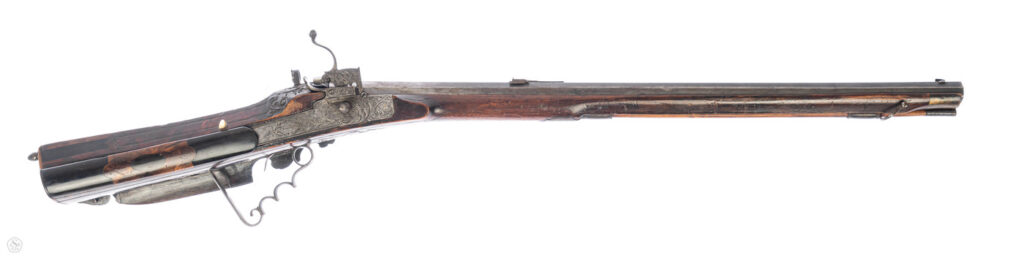
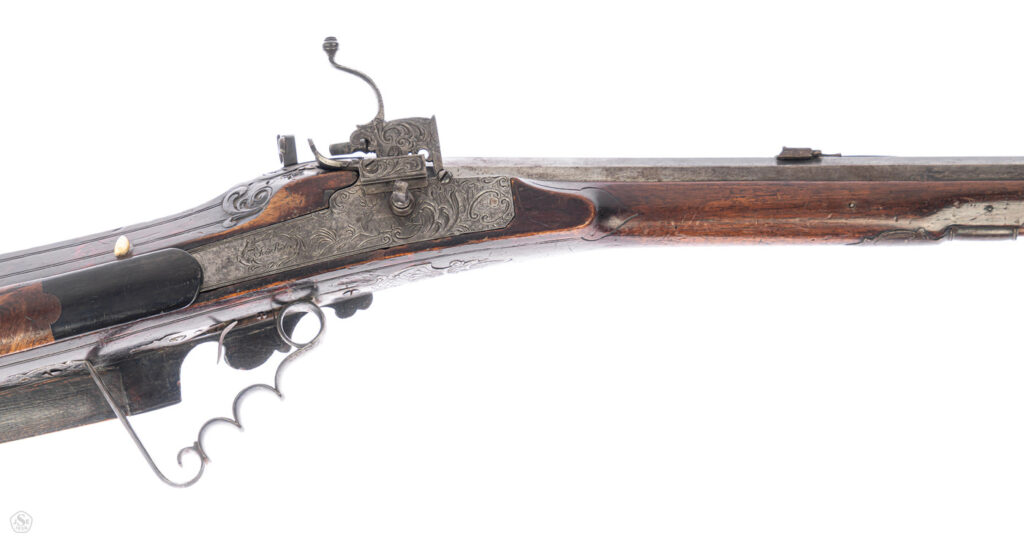
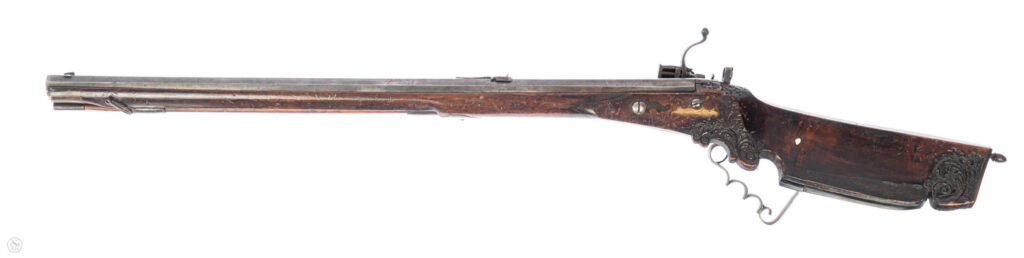
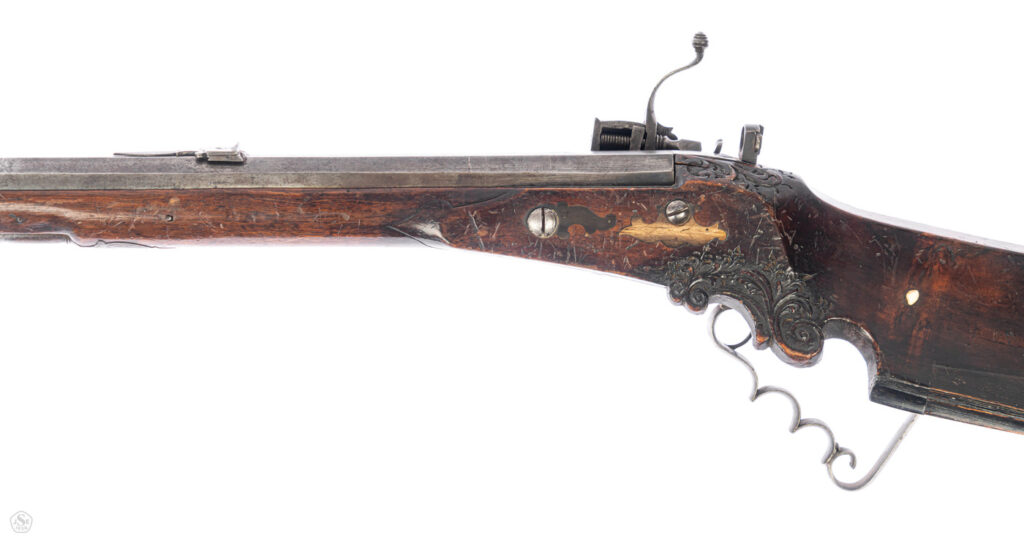
Following are images of a Wheel-lock Rifle made by Ferduinand Ridler am Spital am Phyrn in the Early 17th Century which shares many characteristics with and may be a forerunner to the later Flintlock Jägers. The barrel length is 27″ (69cm) with and overall length of 40″ (102cm) with a cal. of 14.5mm. It is Courtesy of Johann Springer’s Erban Auction House.
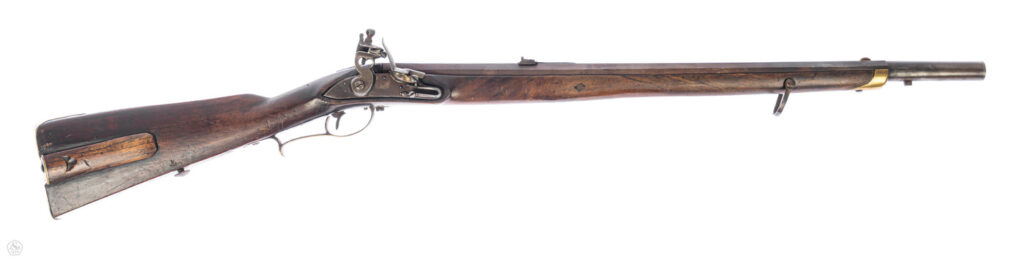
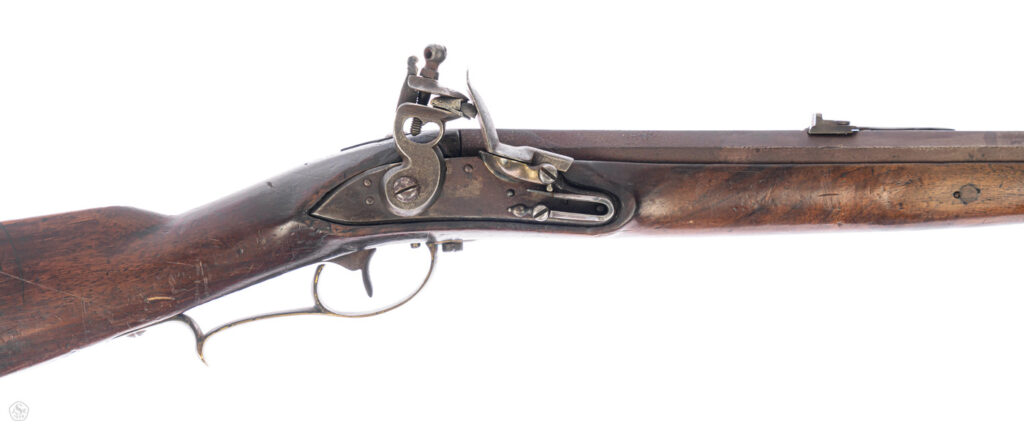
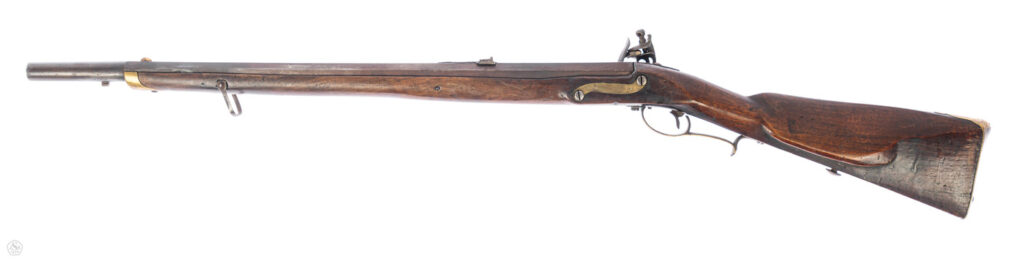
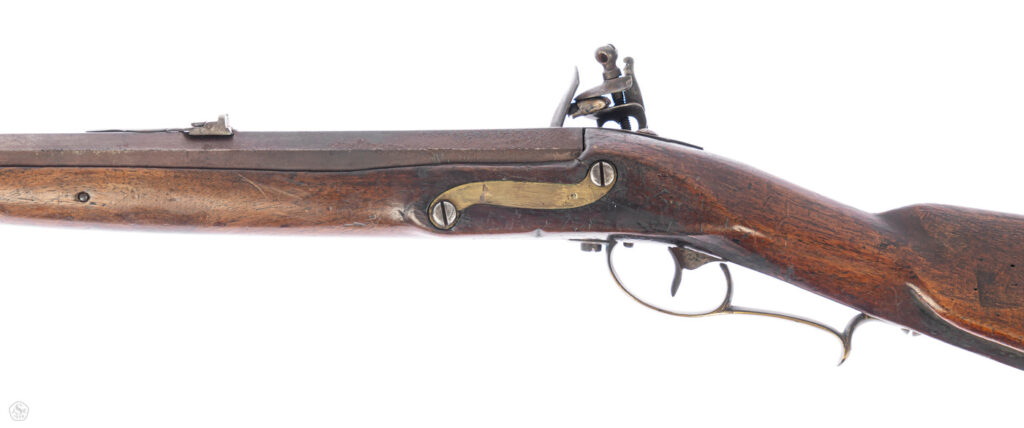
Secondly we have a sample of a Military Jager Short Rifle in 13.9mm caliber for comparison to the Sporting Jägers that follow. It is a model 1807 manufactured around 1810 with a 26″ (66cm) Barrel and an overall length of 41 1/4″ (105 cm). It is also courtesy of Johann Springer’s Erban.
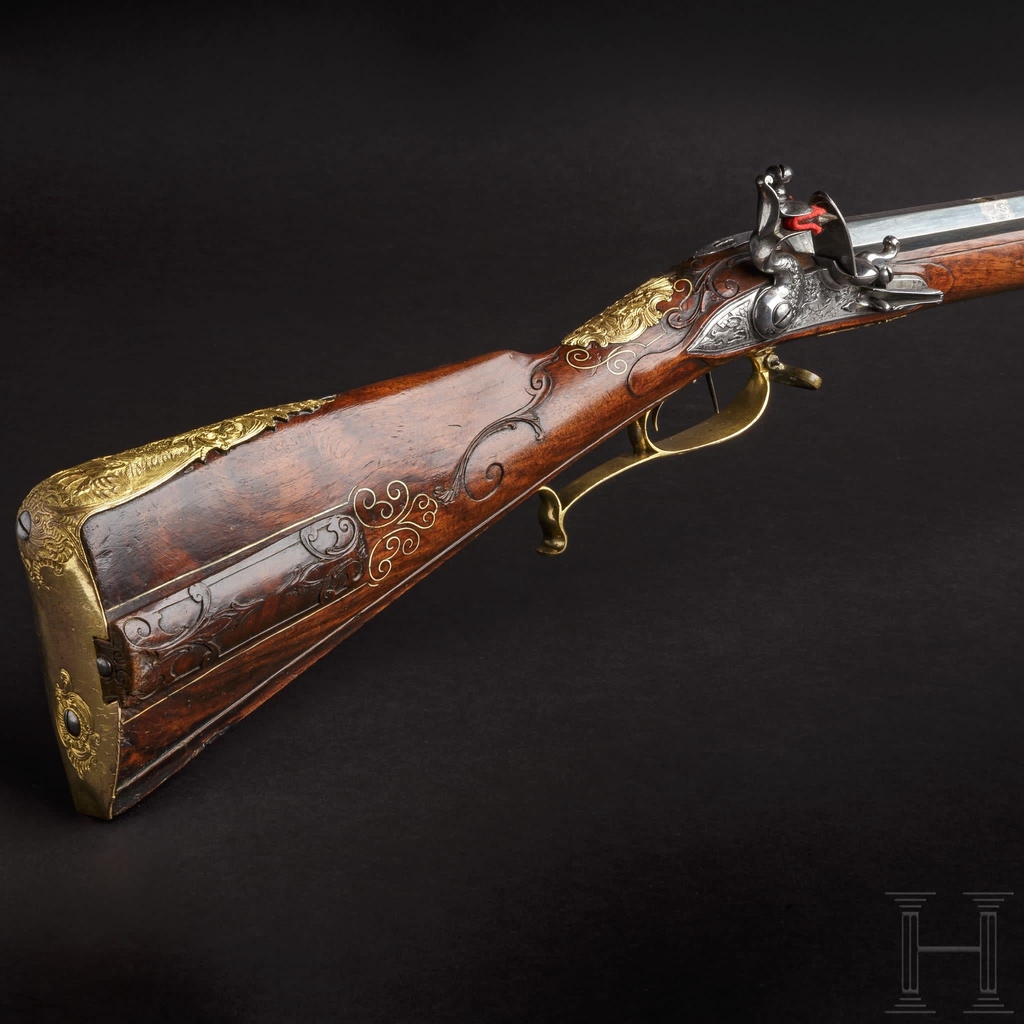
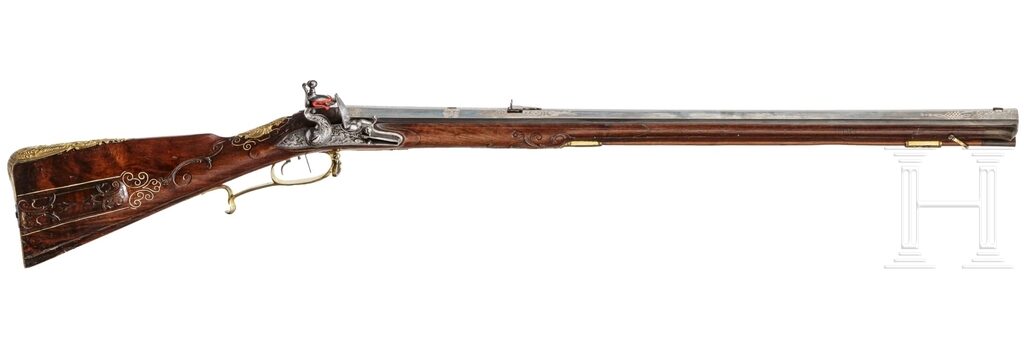
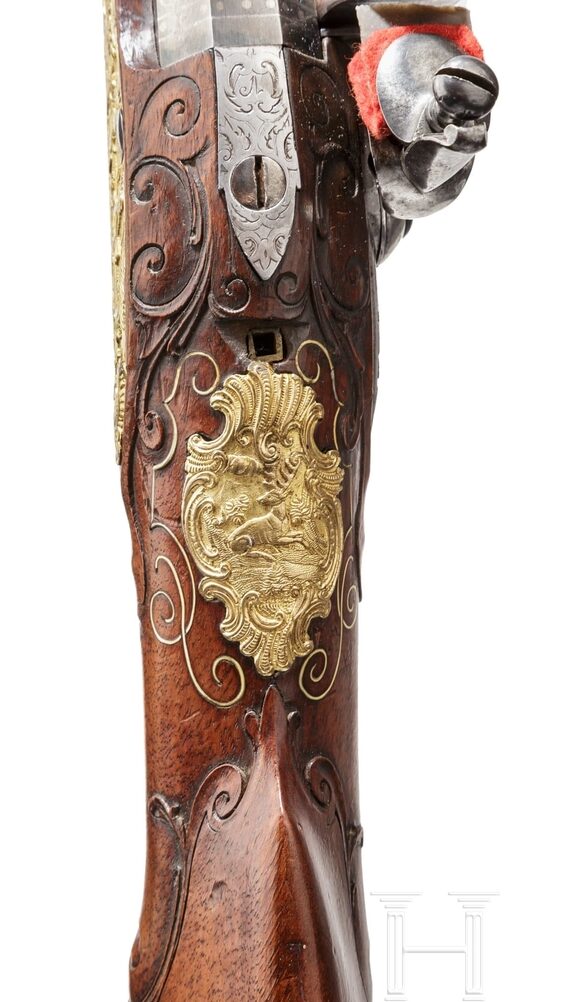
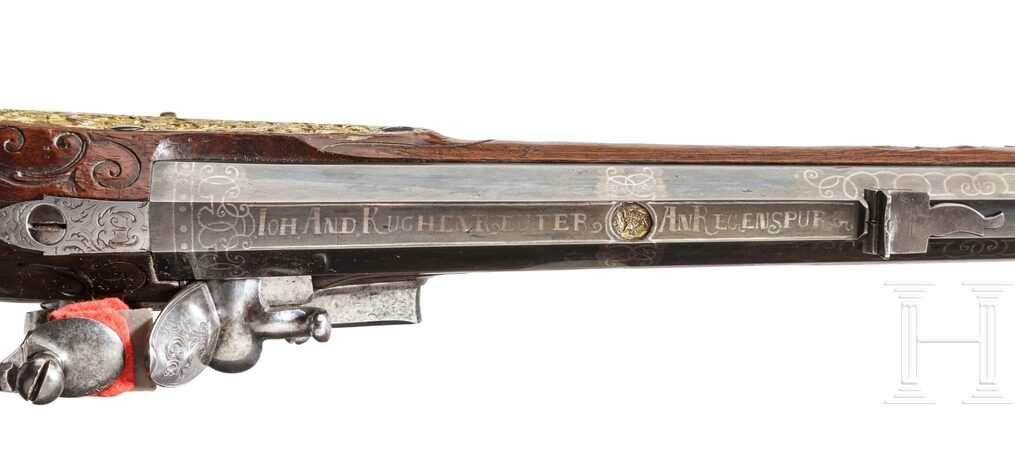
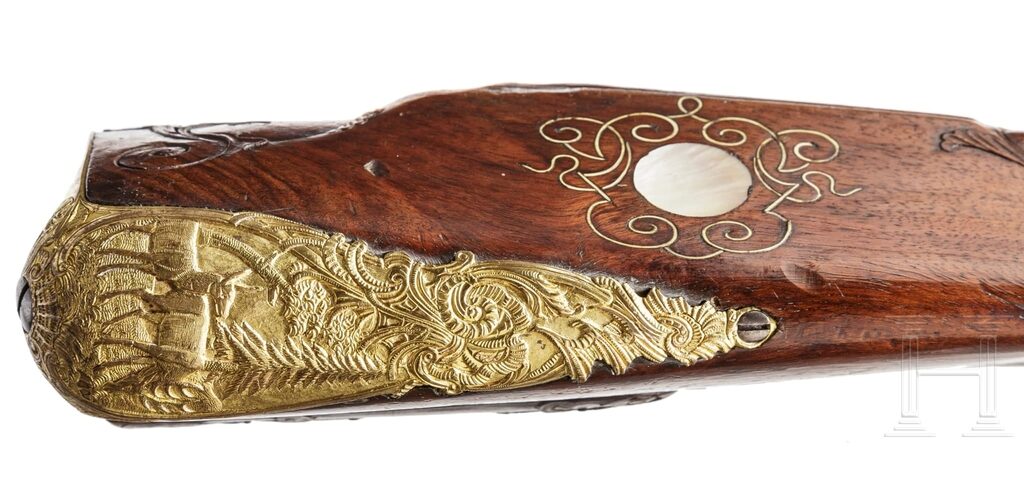
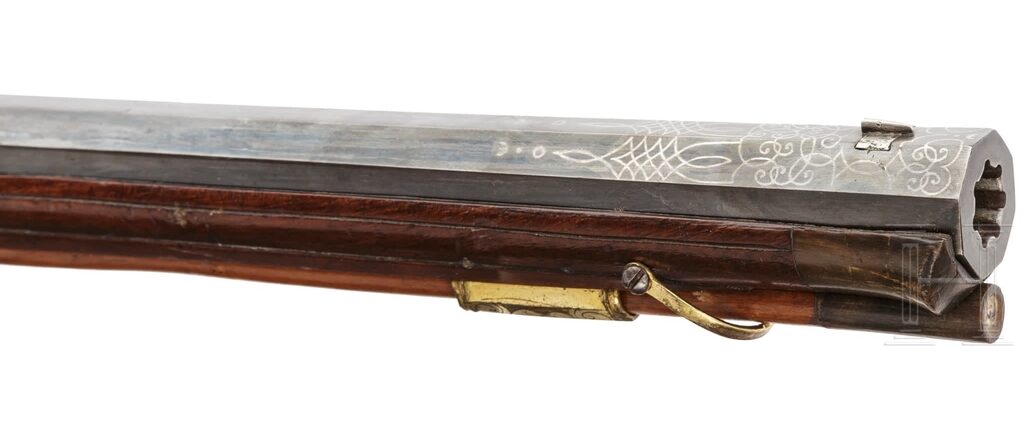
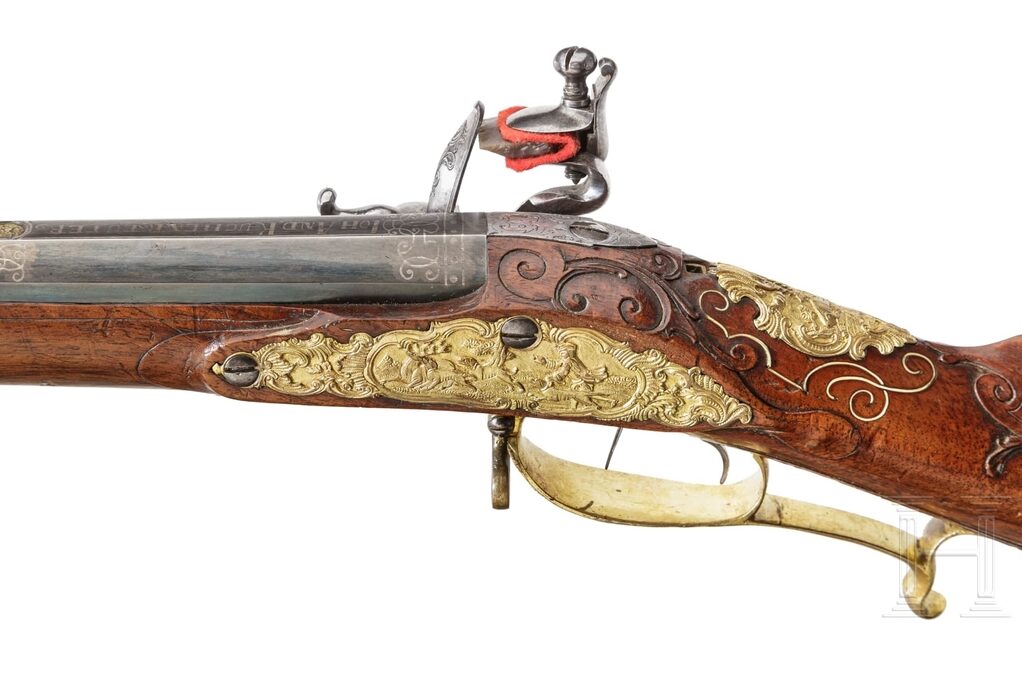
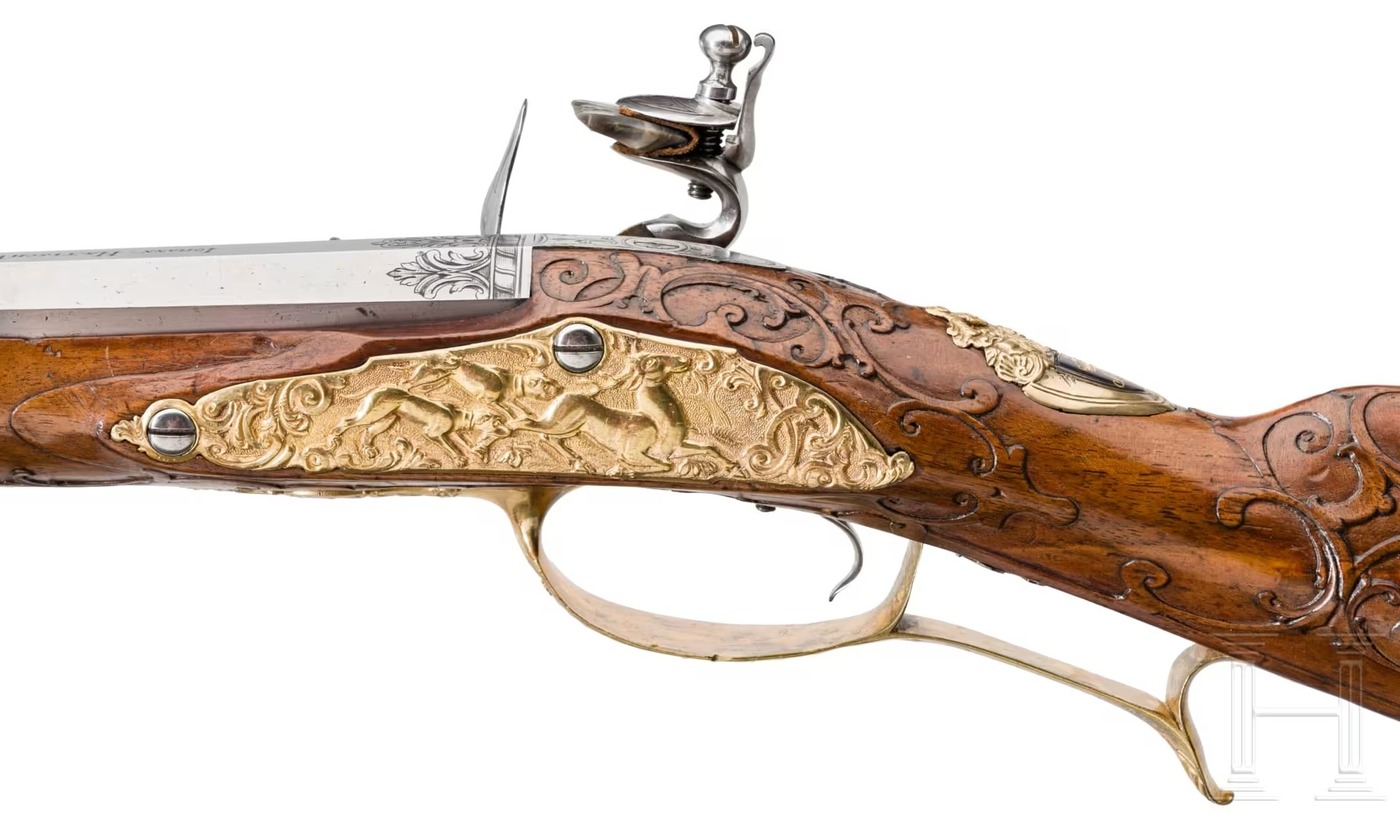
Now we proceed to the true sporting Jäger Rifles with images from Herman Historica Auctions in Germany of a Johann Keuchenreuter – Jäger Rifle which they sold in their Oct. 27, 2016 Auction. © Hermann Historica GmbH, Grasbrunn/Munich
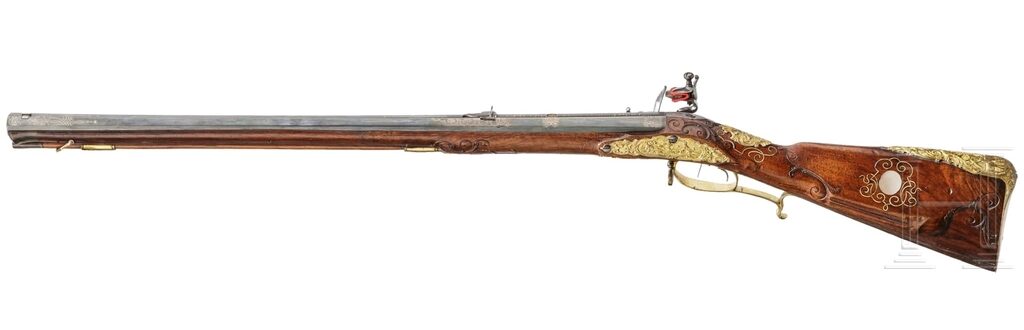
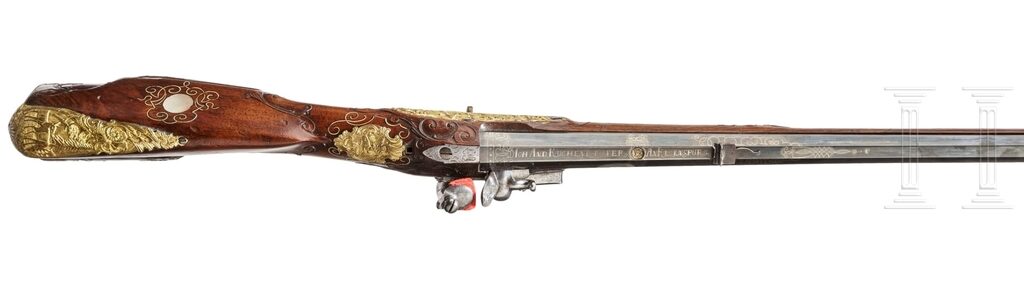
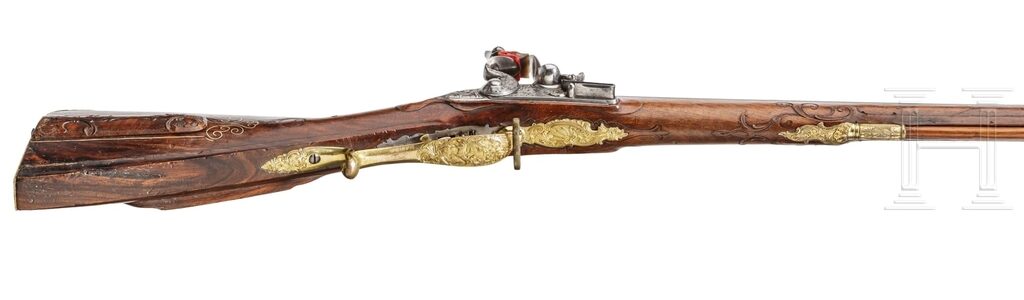
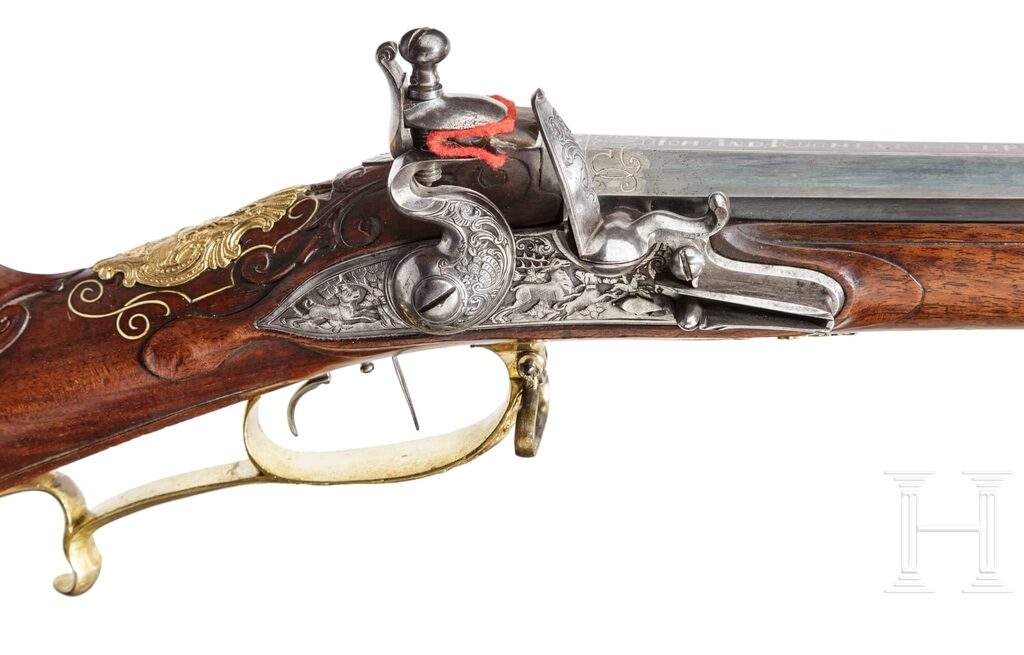
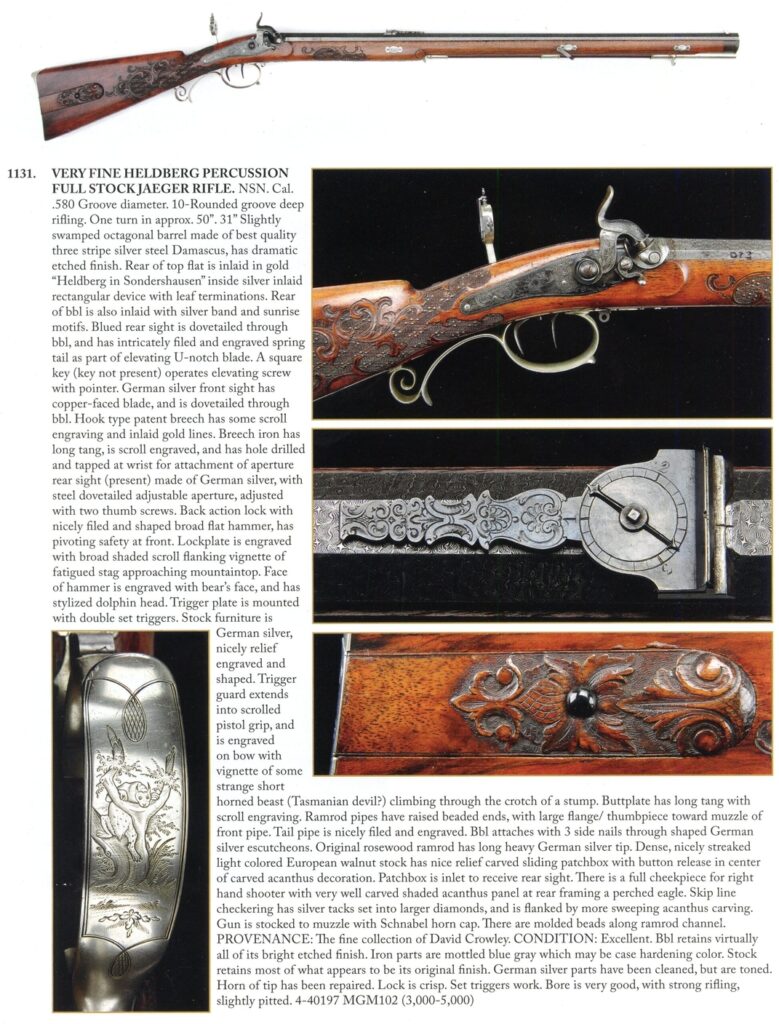
Following are images of a Jäger rifle listed in Poulin’s Aug. 2026 Auction and is courtesy of them.
RIFLE BY HERRMANN OF QUEDLINBURG. Cal. 70. S# NSN. This large heavy rifle was probably made for long range shooting at deer with barrel supported on a wall or rampart. It is of high quality and appears to have been made around 1740. The massive 38-3/4″ slightly tapered octagon barrel measures 1.53″ at breech and 1.43″ at muzzle. Barrel is fitted with one standing leaf, “V” notch rear and brass blade front sights. Barrel is decorated overall with punched in swirls and blossoms. Breech section is silver inlaid with some acanthus leaves. Maker’s name and address “HERRMANN. QUEDLINBURG” is in silver inlaid acanthus terminated ribbon on top of barrel (possibly Christian Ernst Herrmann the younger of Wildenfels, which is not too far from Quedlinburg, who was working around 1740). Lock with rounded plate features reinforced serpentine cock, inset rounded pan, unbridled friction frizzen and file decorated feather spring with trifid finial. Lock is engraved with some relief scroll. Rifle is fitted with double set triggers. Stock made of European walnut extends to muzzle with heavy schnabled brass cap and is pinned to barrel. Raised carved scrolls surround barrel tang and are found at ends of swept right hand cheekpiece. Relief mouldings are around locks, engraved brass sideplate and along ramrod channel. A patchbox is on right side of butt with sliding wooden cover. An eight pointed star of contrasting woods is inlaid on cheekpiece. All furniture is brass that is very nicely relief engraved in floral motif with heavy buttplate, trigger guard with bump forming grip and large sideplate previously mentioned. A newer hickory ramrod with bone tip mounts through heavy spurred front pipe, beaded mid pipe and heavy thimble. CONDITION: good. Iron parts are lightly cleaned brown patina. Stock with heavy oil refinish with details softened. Brass nicely toned to mustard brown. Bore is very good; shiny with some scattered deep pits. Lock and set triggers are operable. (01-27825/MGM). ANTIQUE. $3,000-5,000.
Lot #5381


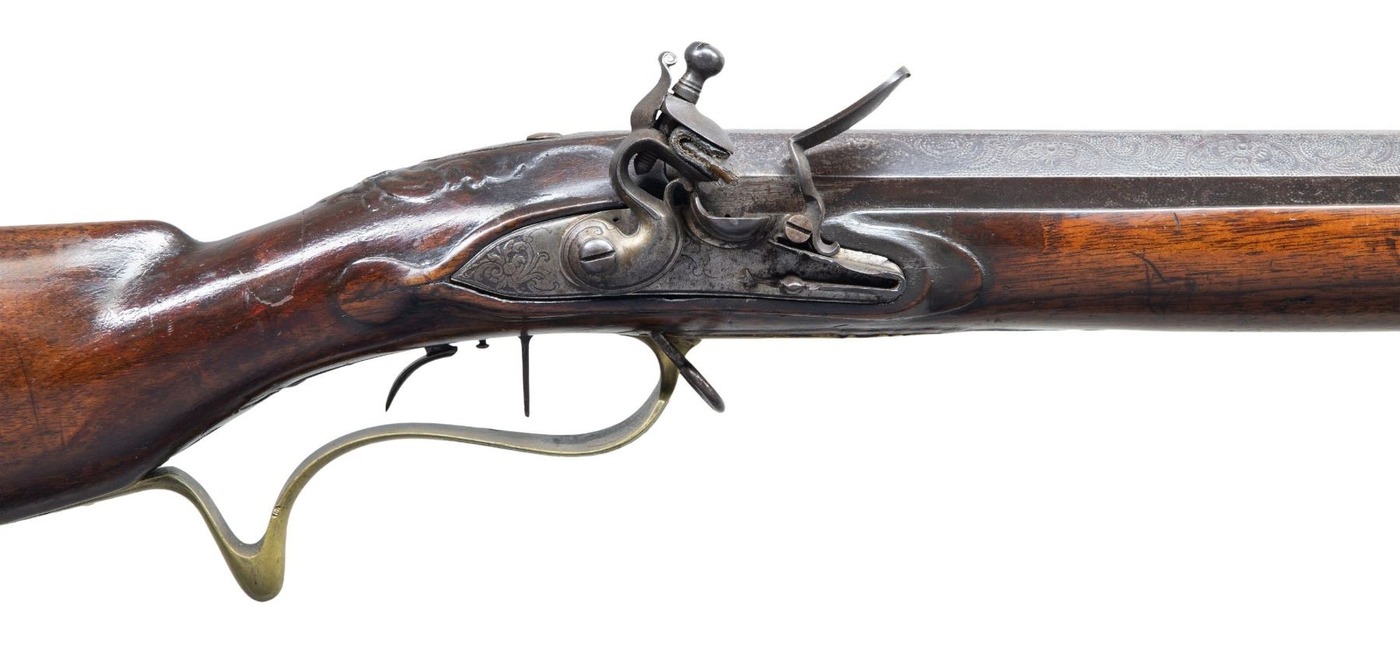
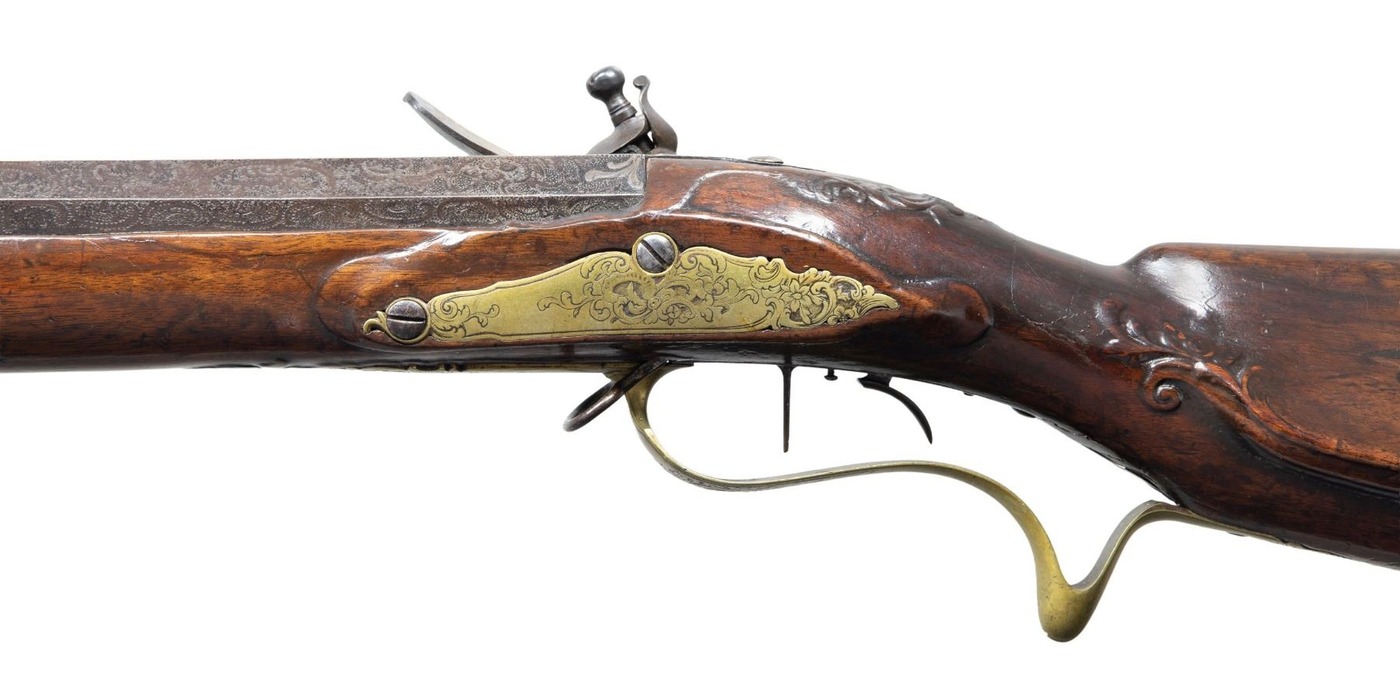
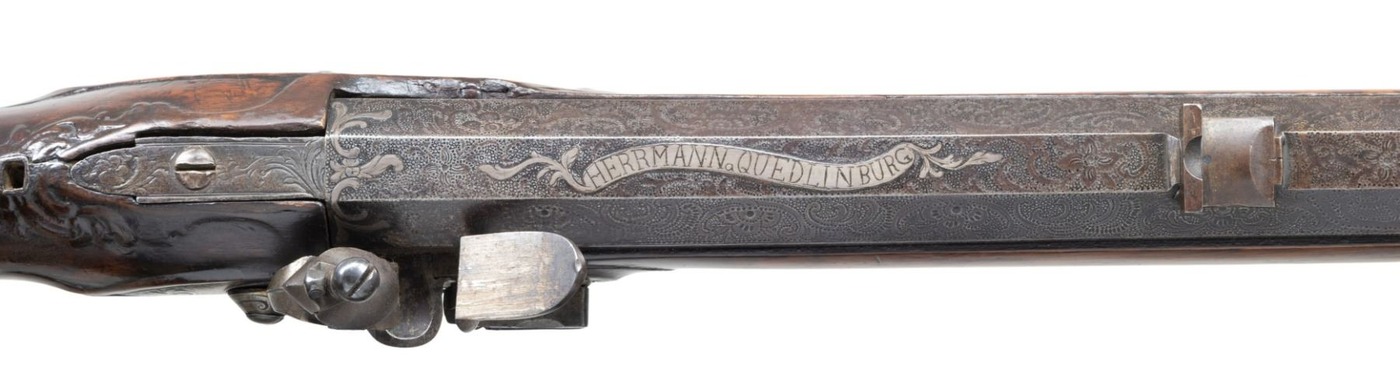
On Nov. 20, 2024 Hermann Historica sold a group of Wheelock and Flintlock Rifles which I consider to be outstanding and three of the Flintlock Jägers are shown next. They are shown courtesy of Herman Historica.
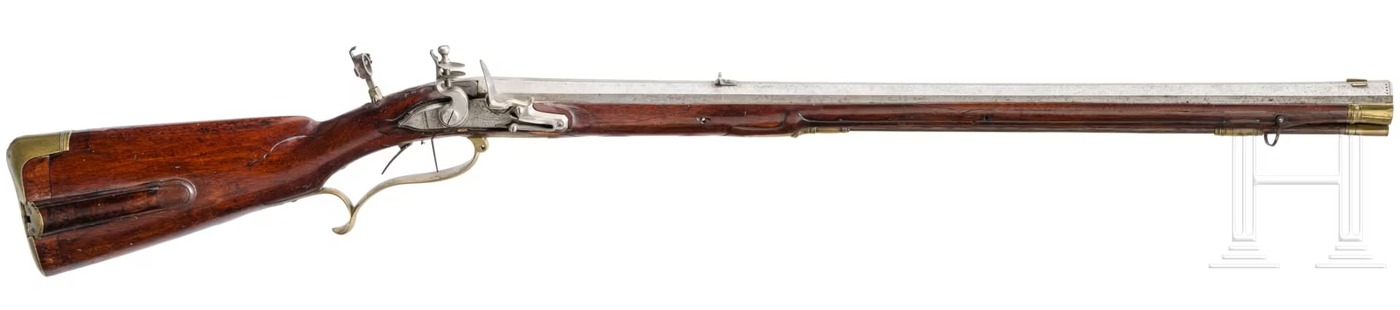
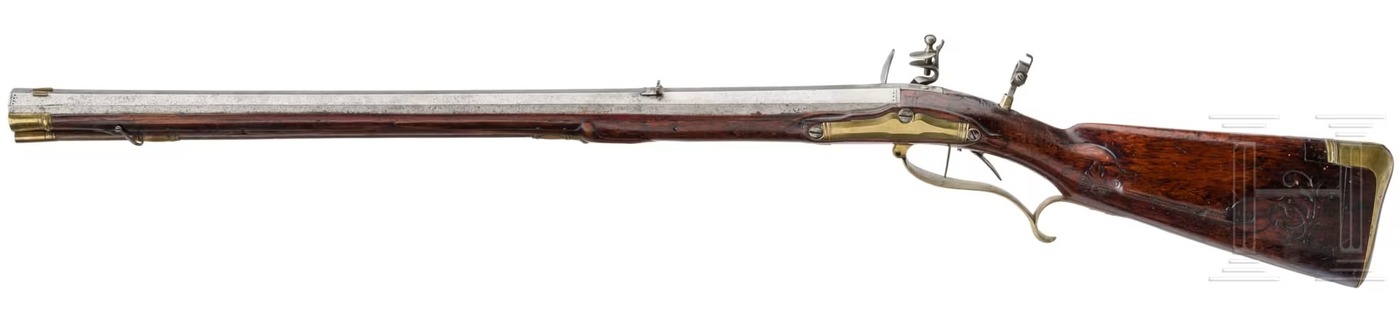
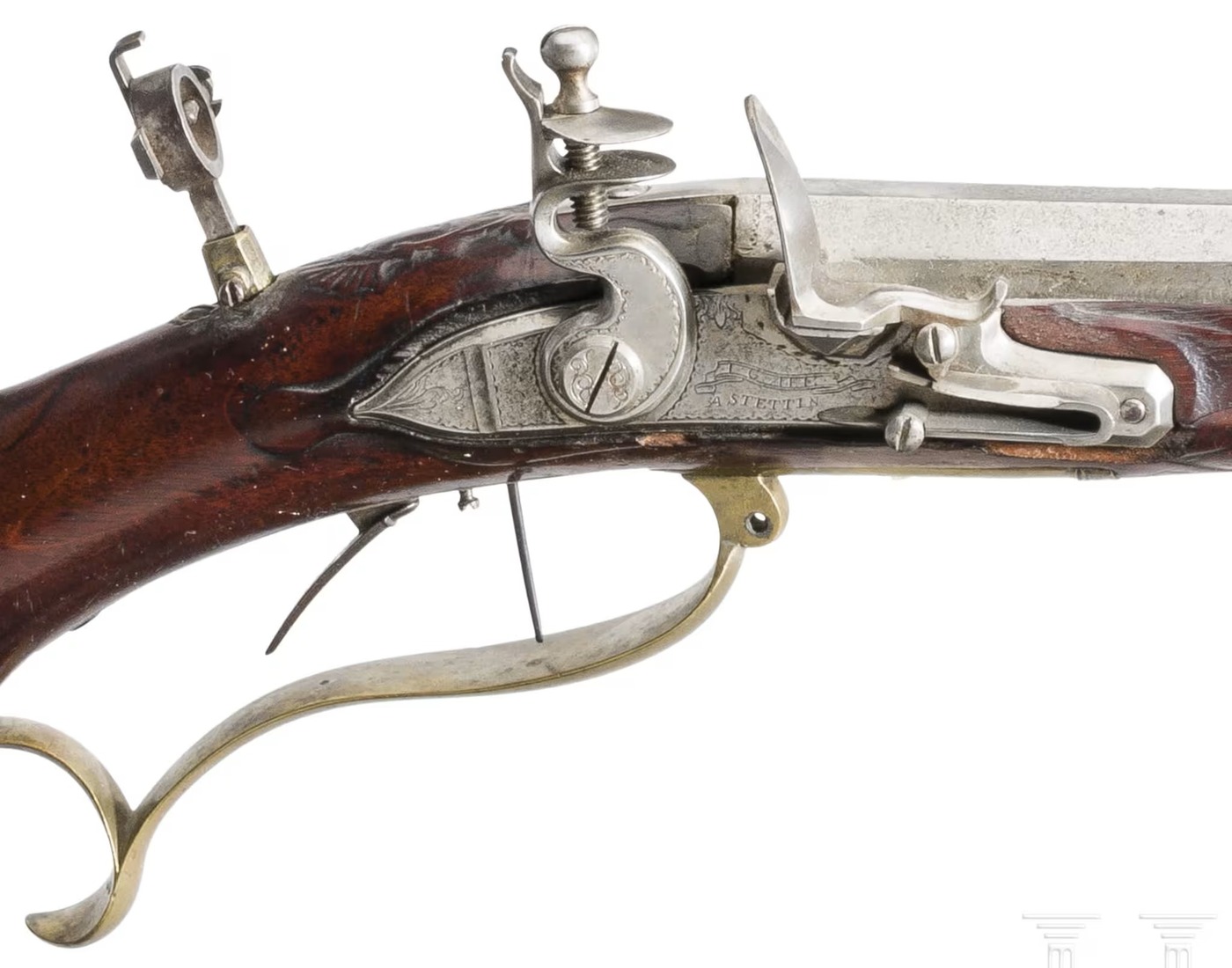
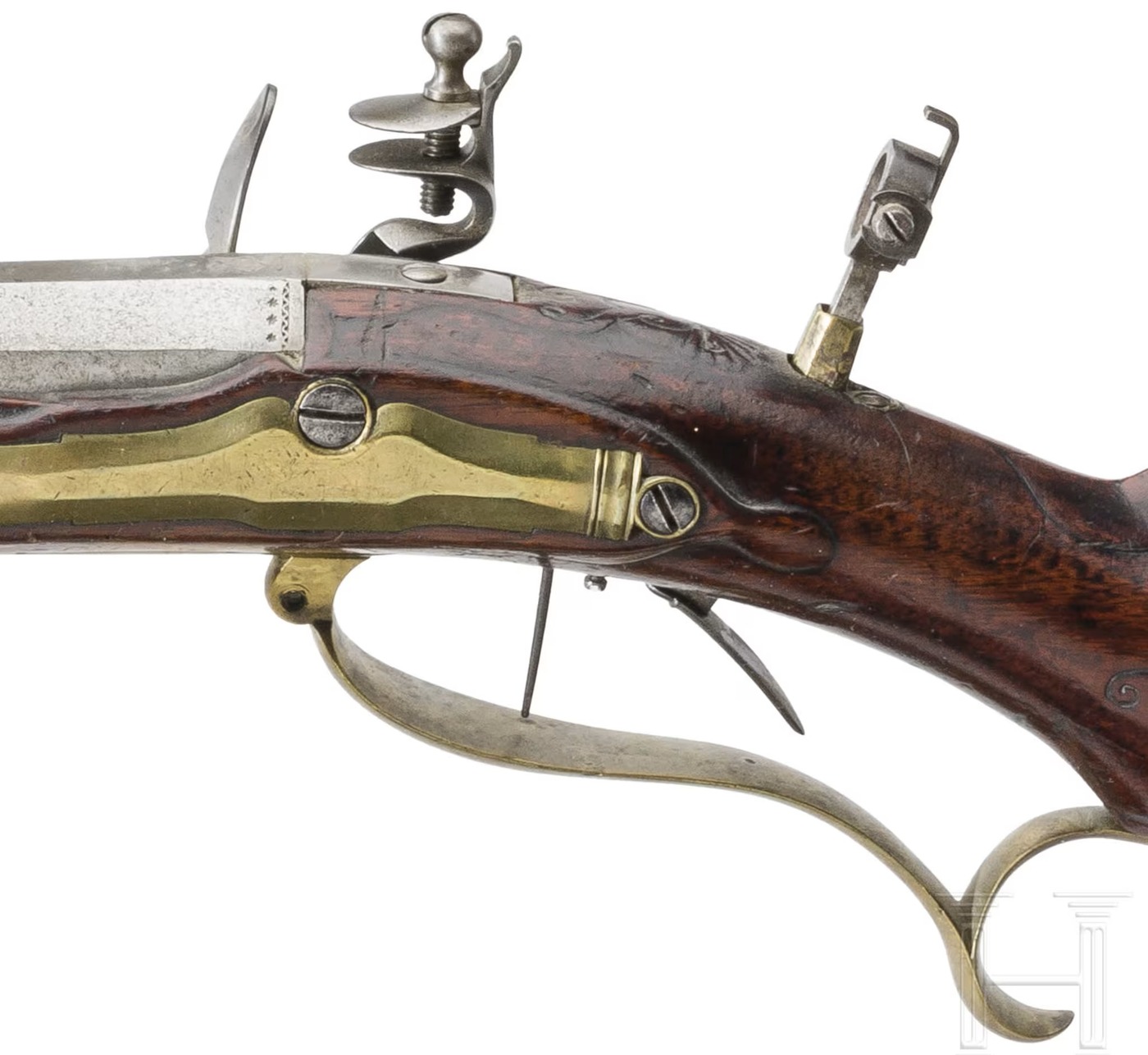
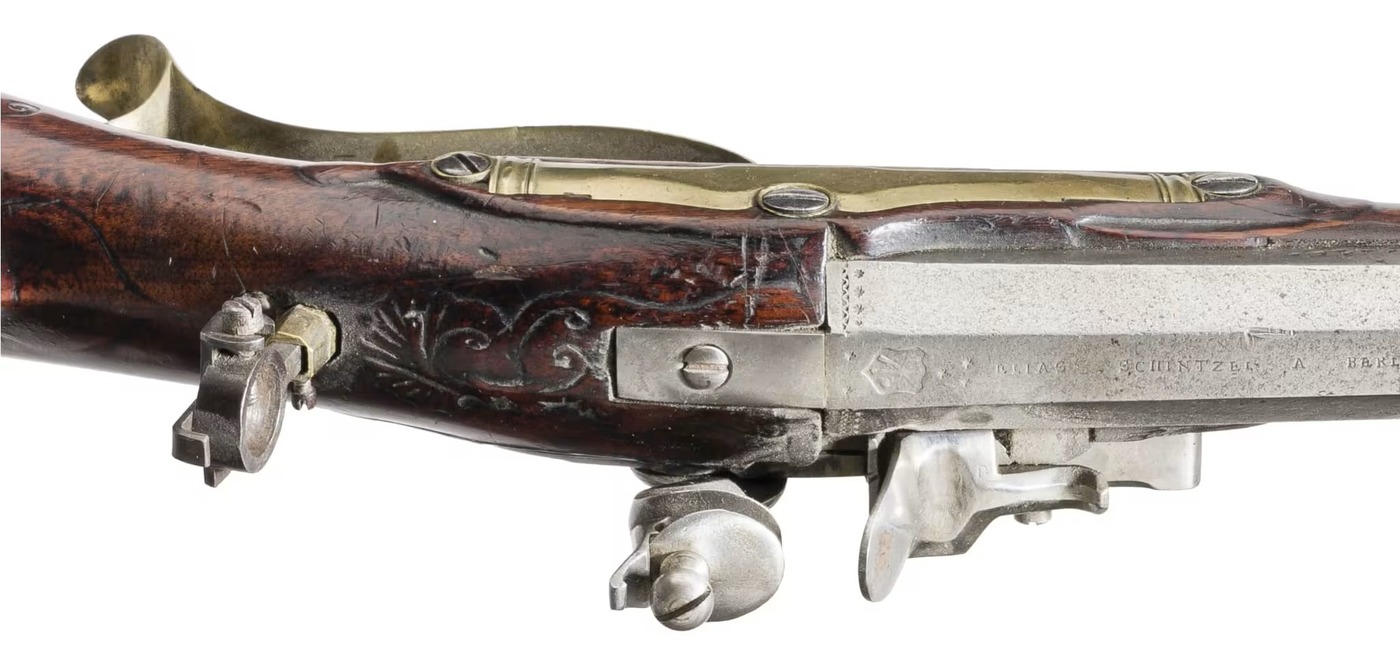
Flintlock Jaeger #7098
Gezogener Oktagonlauf mit matter Seele und gutem Zug-/Feldprofil im Kaliber 16 mm, auf der Oberseite eingeschobenes Messingkorn und Standkimme, signiert und datiert “Elias Schnitzel A Berlin1.6.8.7”. Leicht graviertes, reaptiertes Steinschloss, auf der Schlossplatte signiert “J.G. Abe A Stetin”, Stecherabzug, lediglich eine Rast. Leicht verschnittener Vollschaft mit Diopter auf dem Kolbenhals und Messinggarnitur. Hölzerner Ladestock mit Messingdopper. Eisenteile gereinigt und stellenweise leicht narbig, Kolben verlängert, Risse und Ergänzungen am Vorderschaft. Länge 114 cm.

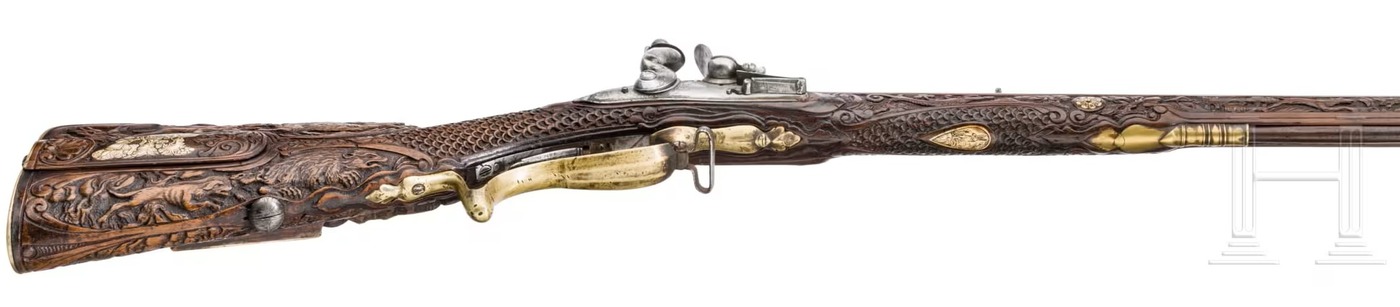
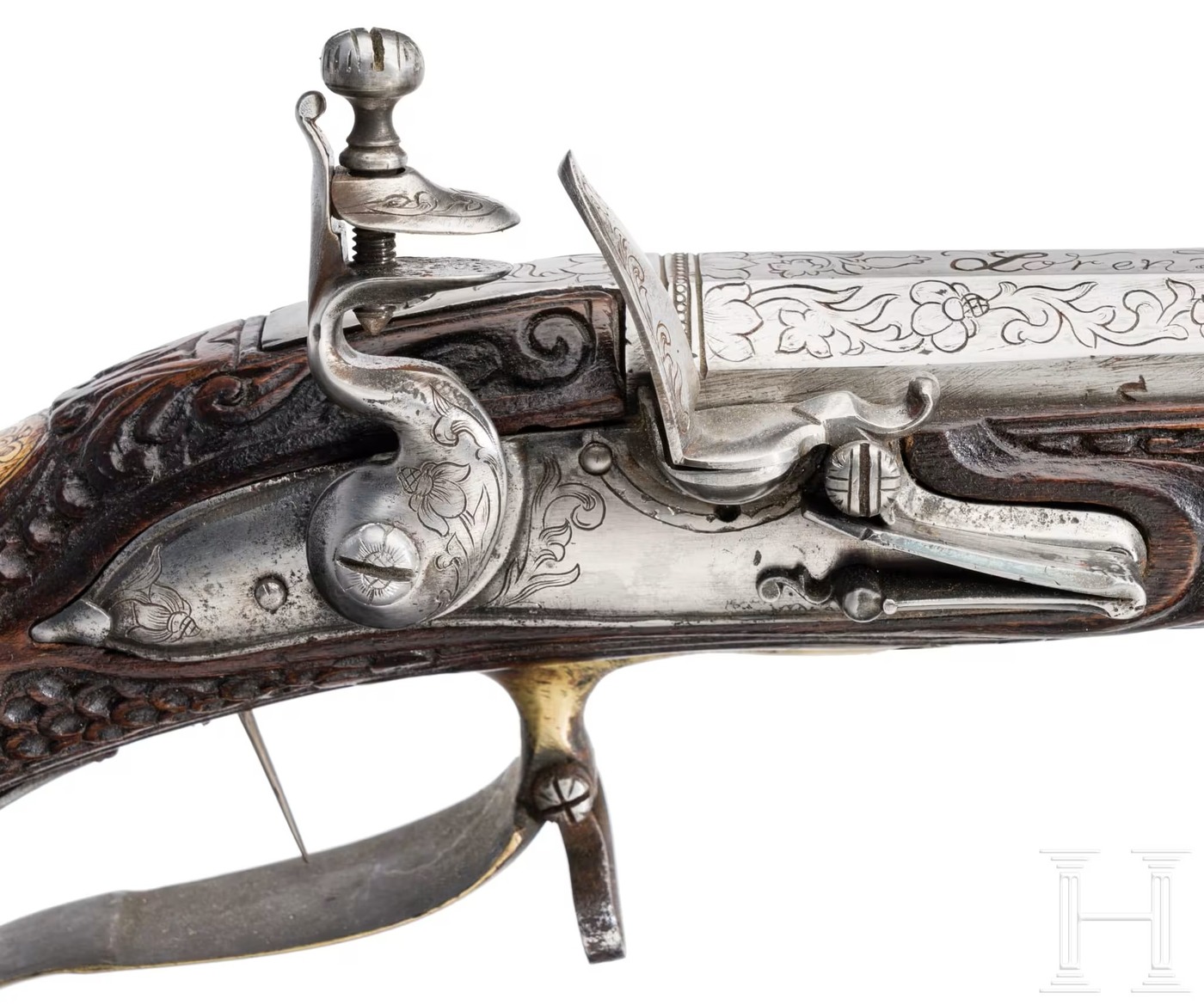
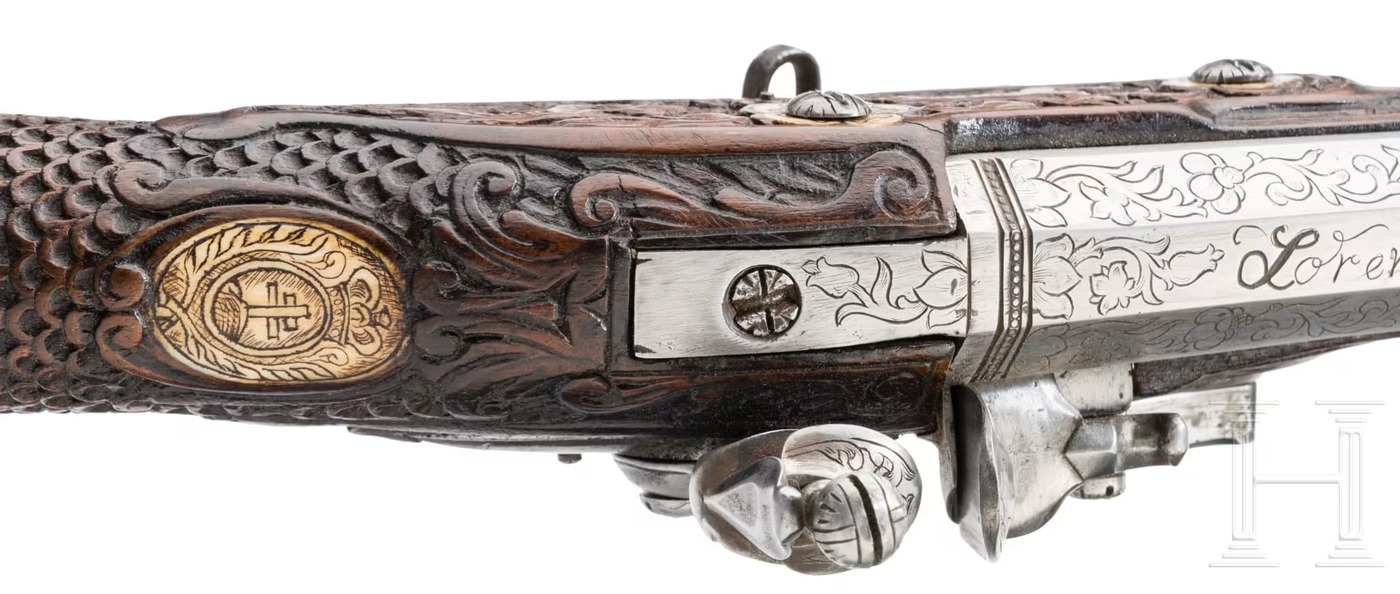
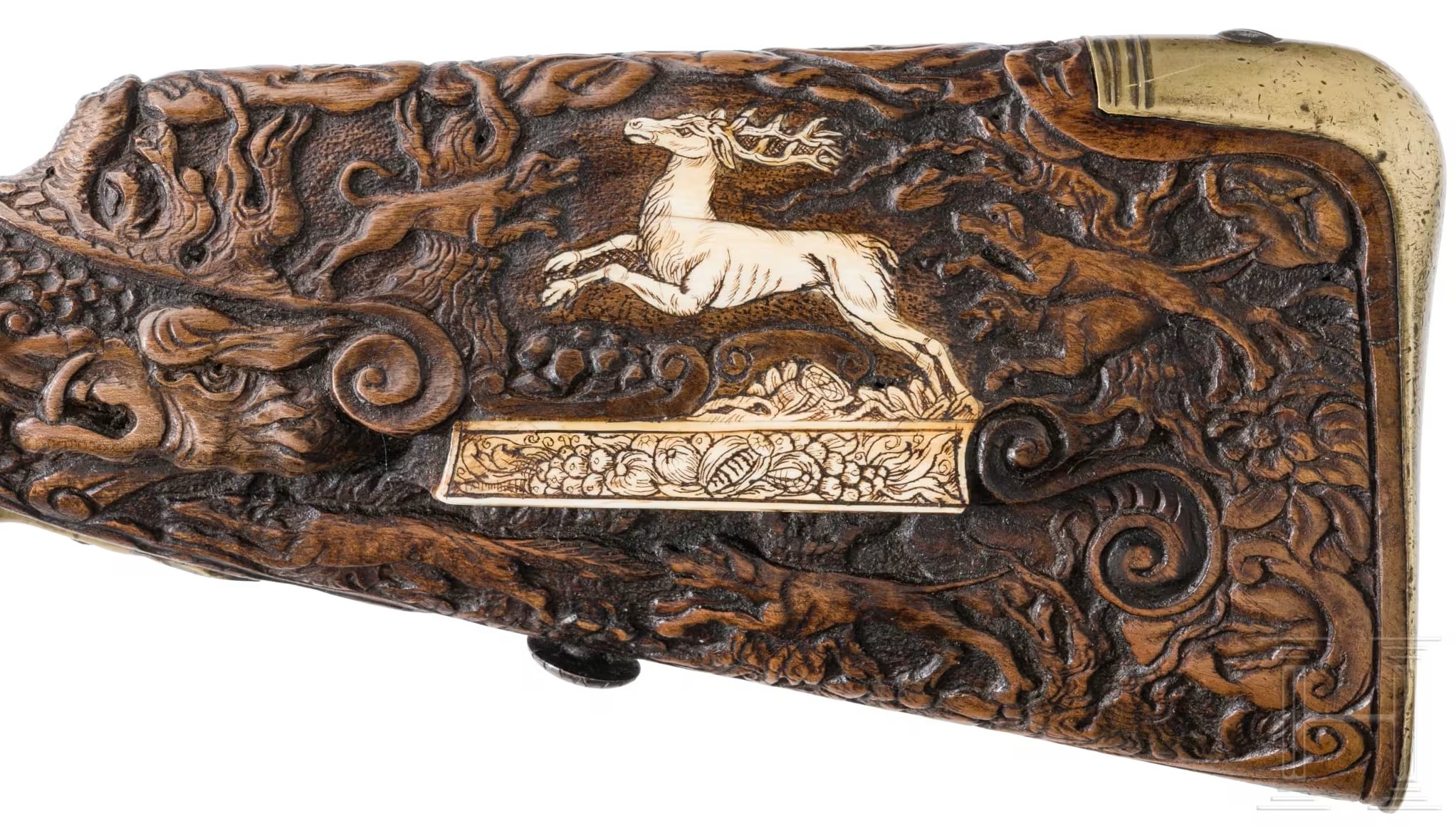
Hell, Strasbourg 1740 Flintlock Rifle #7104
Grooved octagonal barrel in 17 mm calibre, bore somewhat rough, the upper side with dovetailed brass front sight and cut rear sight as well as signature “Lorenz Hell Straßbourg”. Slightly engraved flintlock, lock mechanism somewhat fatigued, pan not original, set trigger. Stock profusely decorated with carved hunting scenes, animals and tendrils as well as engraved bone inlays, patch box and engraved bone nosepiece, smooth brass furniture. Wooden ramrod with bone tip. Length 106 cm.
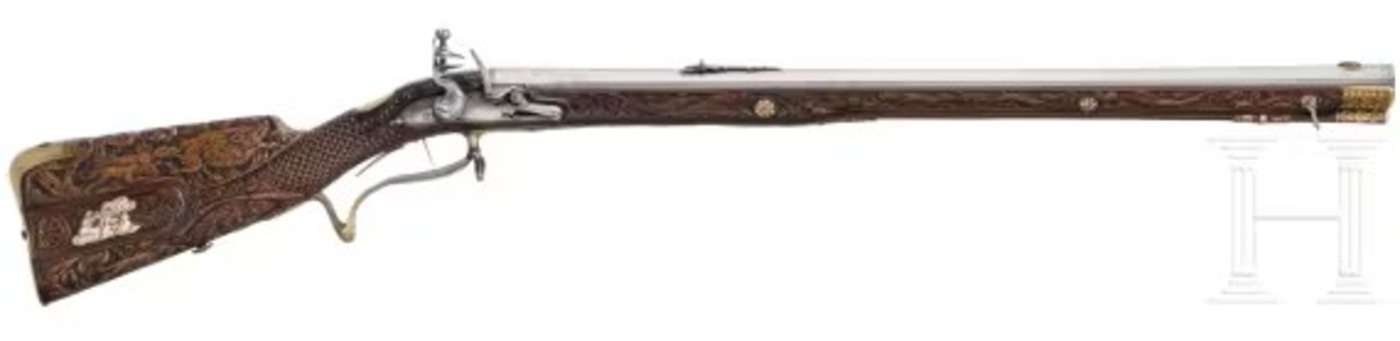
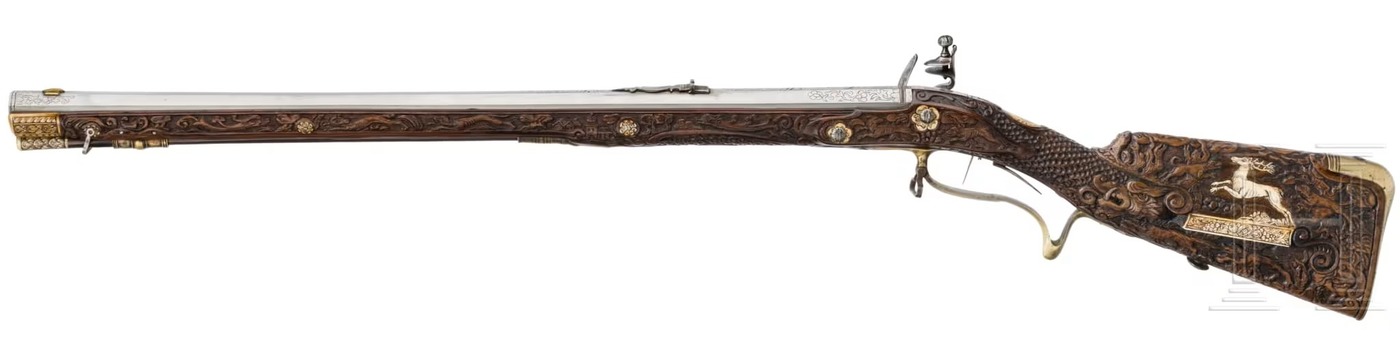
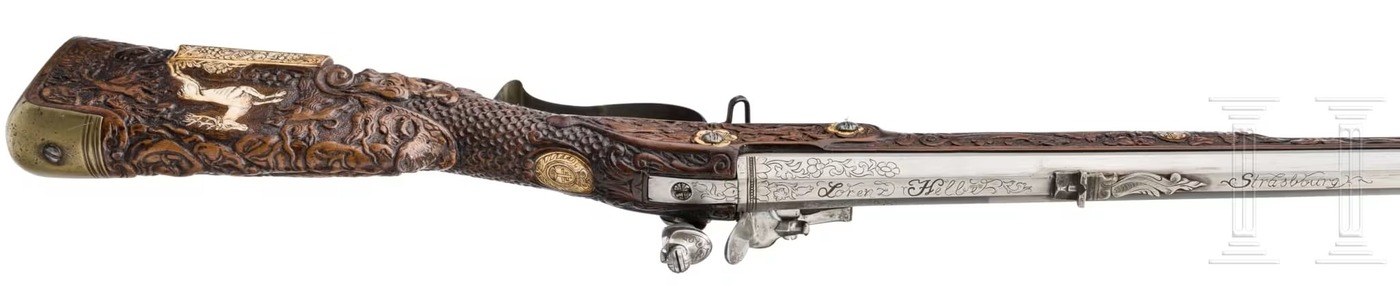
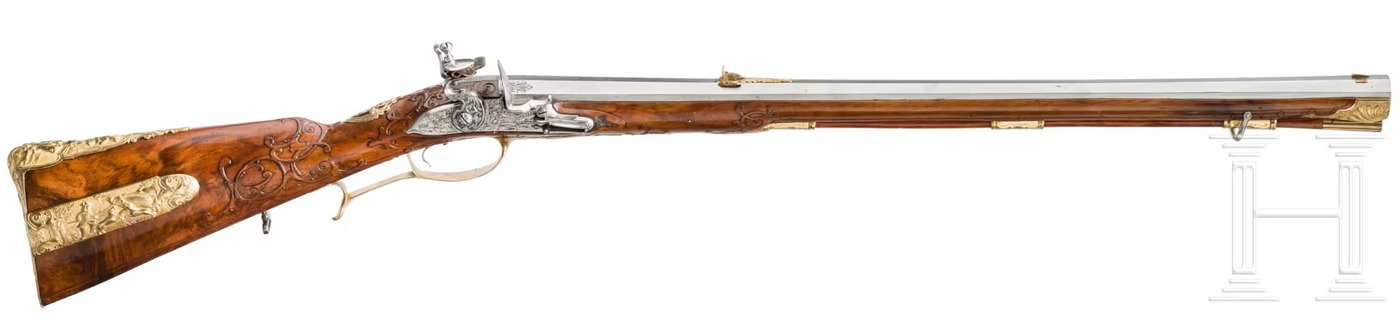
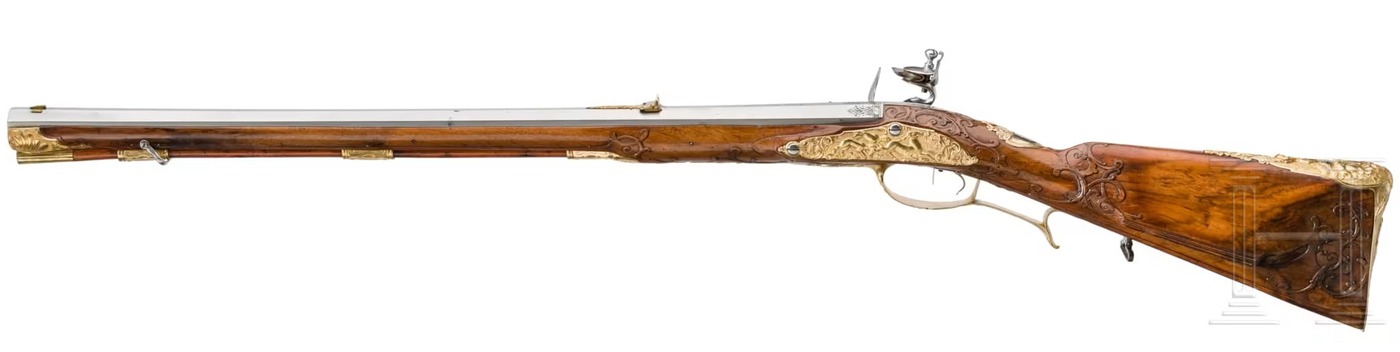
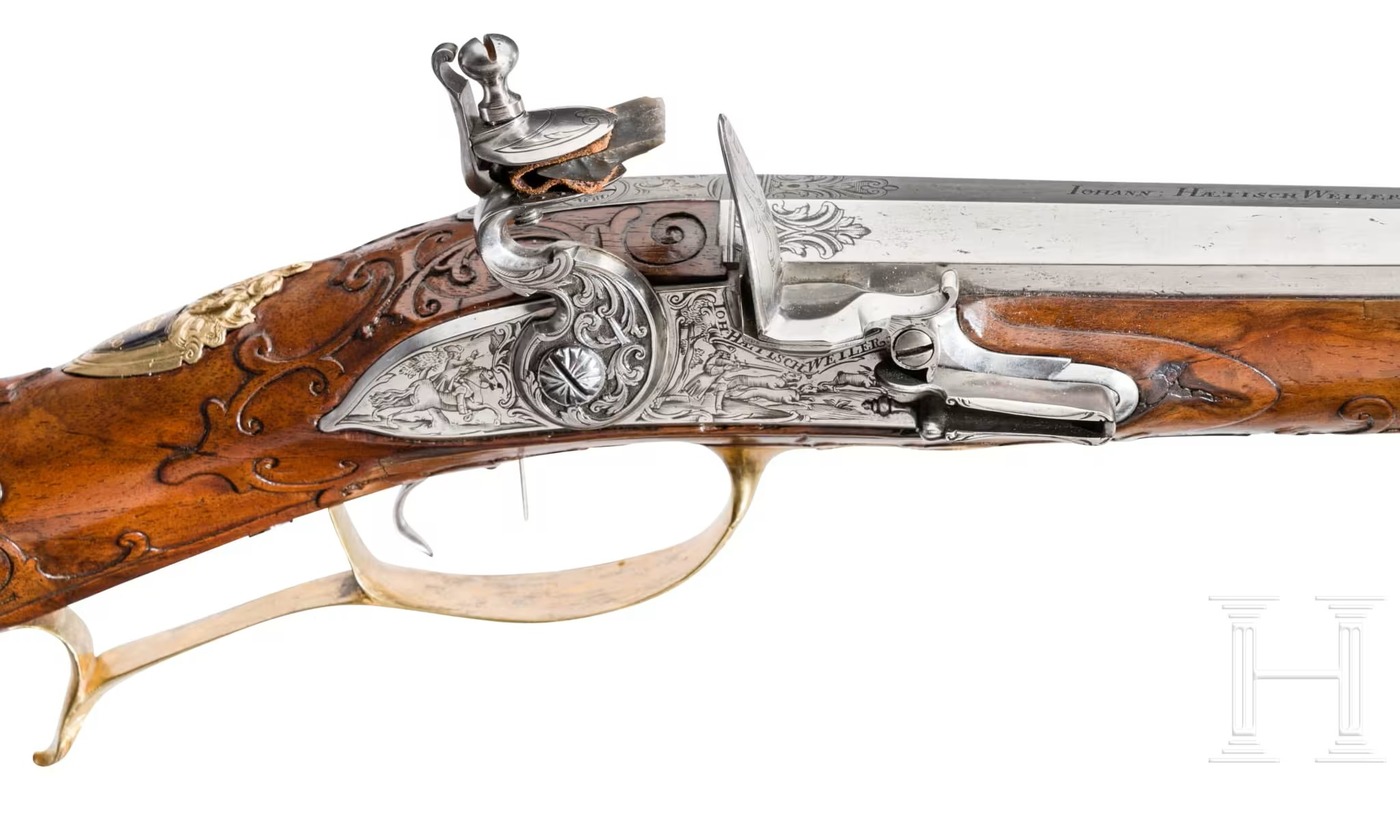
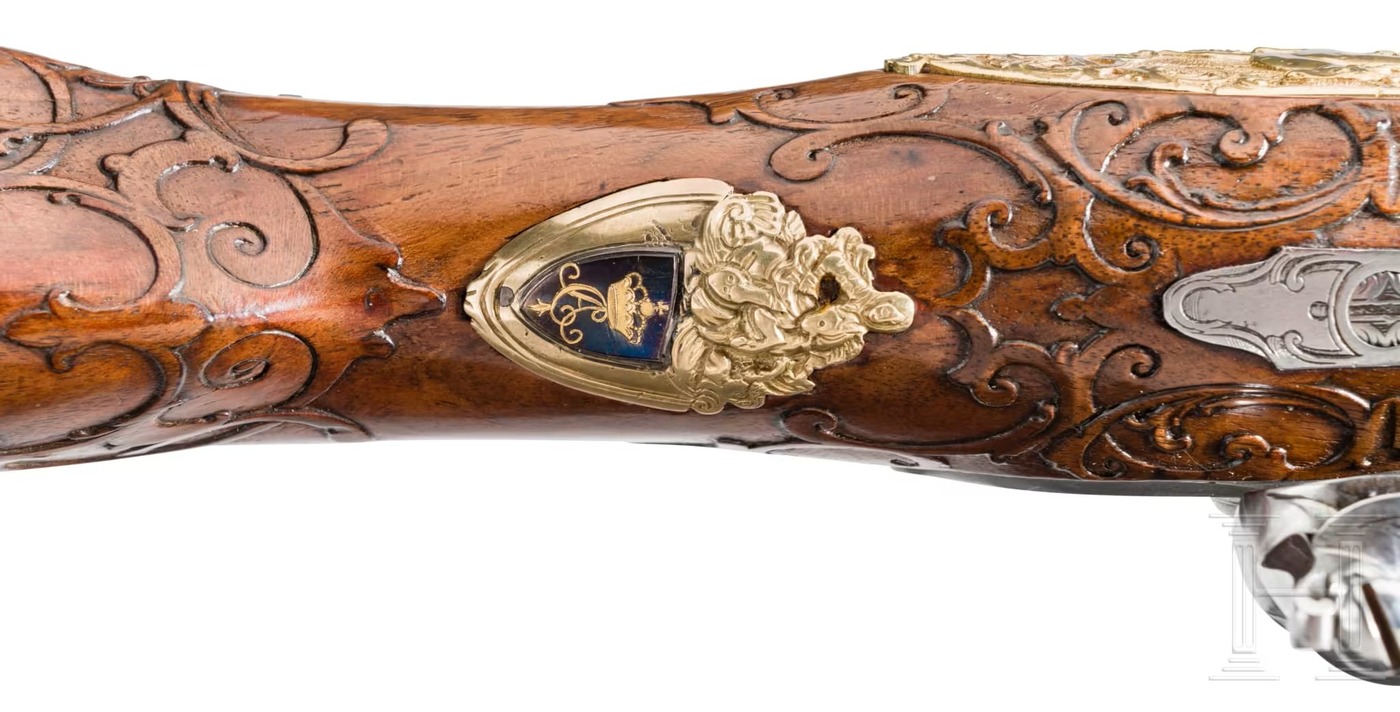
- Haetischweiler Flintlock Rifle 1740 # 7108
Octagonal, slightly swamped barrel rifled with seven grooves in 15 mm caliber. Dovetail sights of fire-gilt brass with folding rear sight. Finely engraved signature “Iohann HaetischWeiler” at the breech. The barrel shank with floral engraving, marked “1” on the tang. Lock plate with finely engraved hunting scene, repeated signature below the pan. Hammer deeply pierced with scrolling foliage. Trigger with adjustable set trigger. Finely carved walnut full stock with elaborate fire-gilt brass furniture. Side-plate, butt cap, and patchbox cast and chased in relief with hunting scenes. Thumb-plate with gilt cipher “CA” under princely crown on blued plate. Original ramrod with old restored crack, the tip of fire-gilt brass. Length 104.5 cm. The princely cipher “CA” can probably be ascribed to Christian August (1690 – 1747), Prince of Anhalt-Zerbst. Johann Haetischweiler, documented as a gunsmith in Karlsbad between 1730 and 1750, inducted to the guild in 1738.
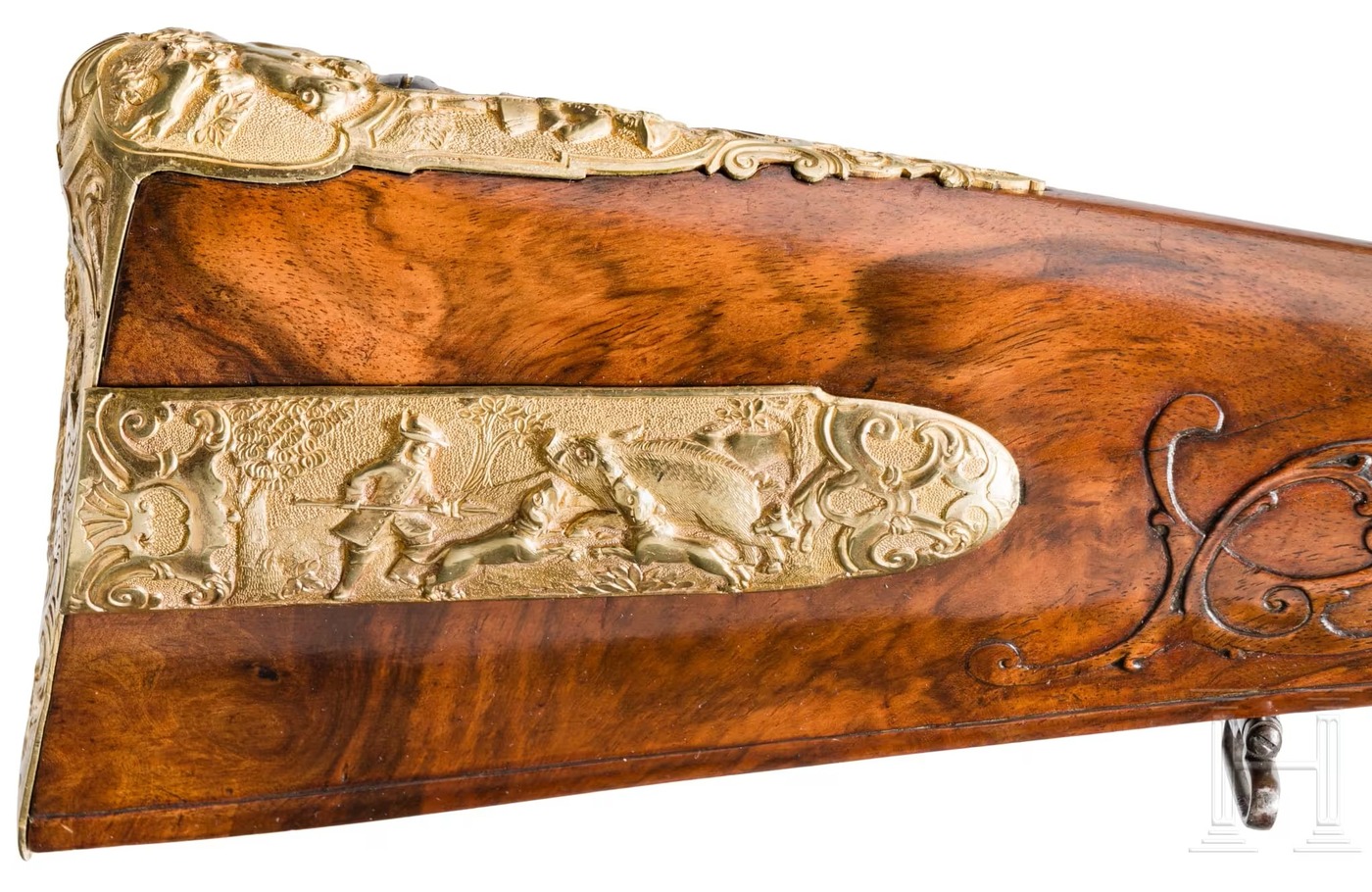
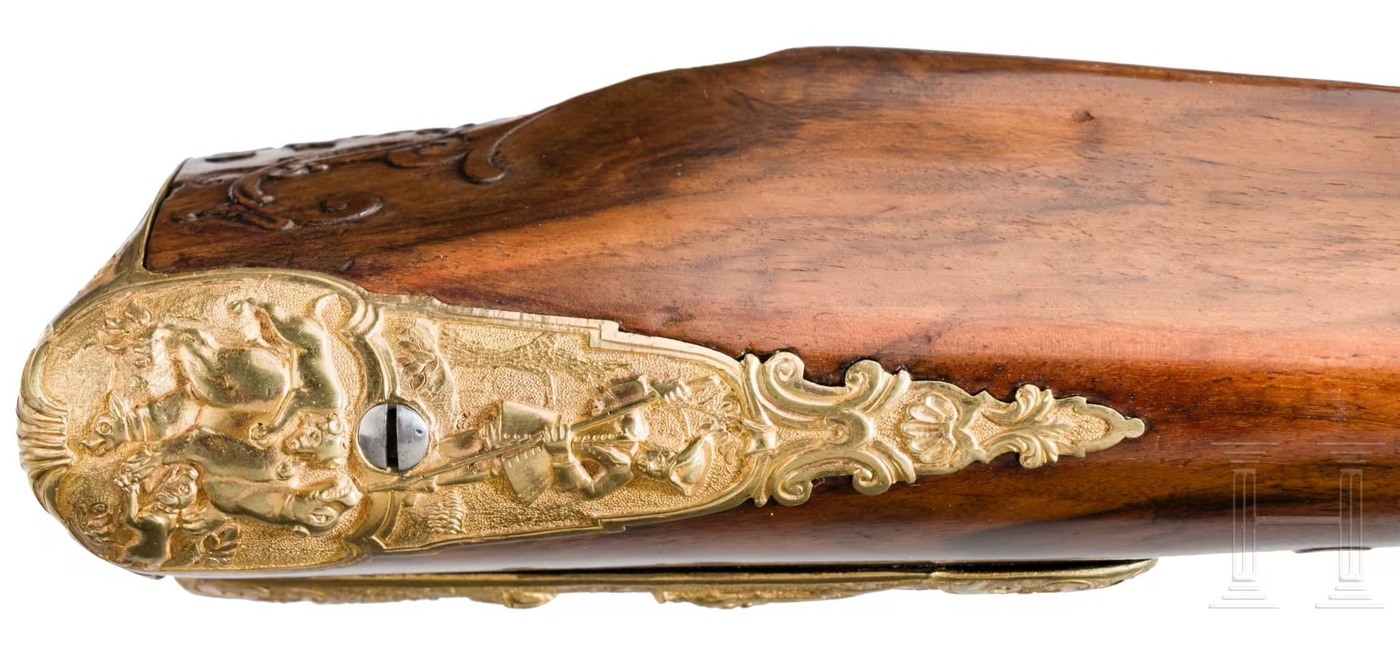
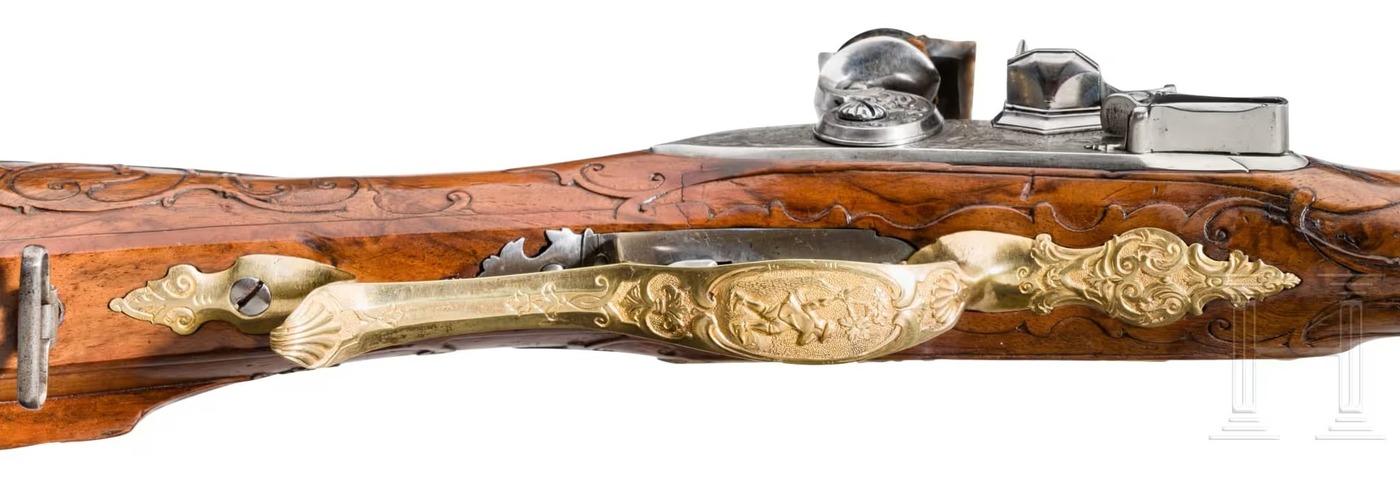
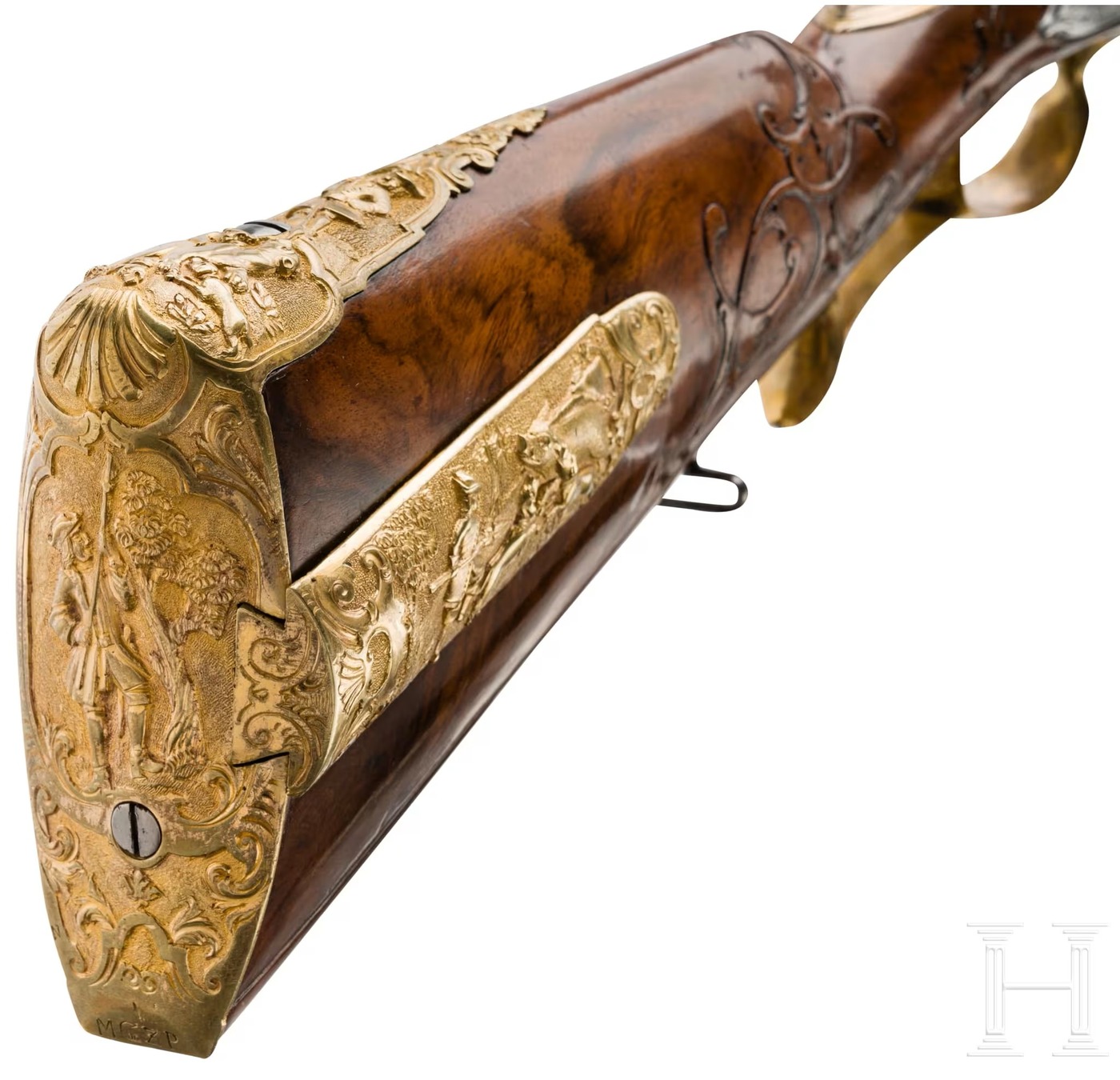
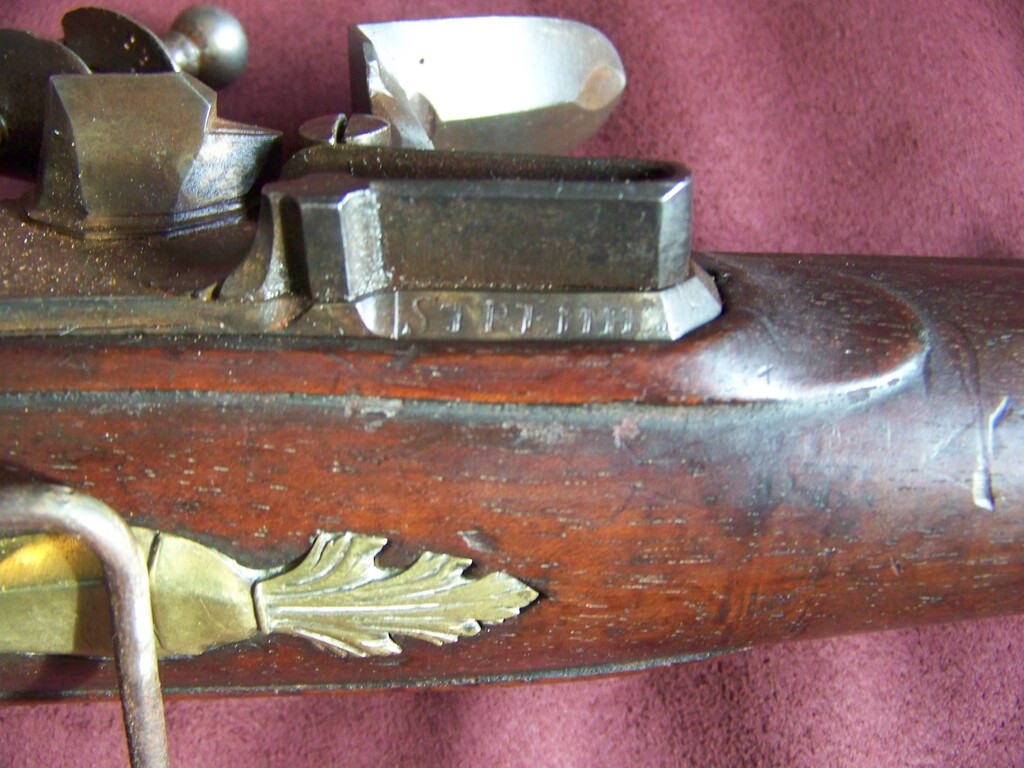
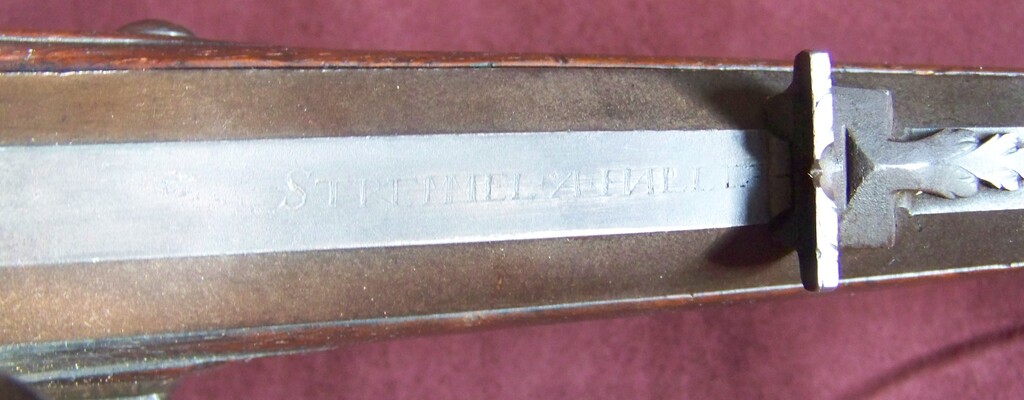
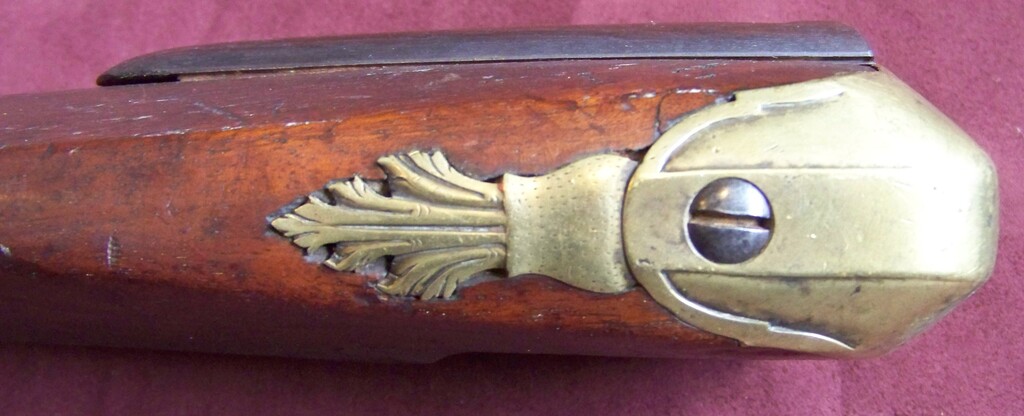
Following are images of a .60 caliber Flintlock Jäger Rifle by Stremmel who worked in Halle, Saxony circa 1725.




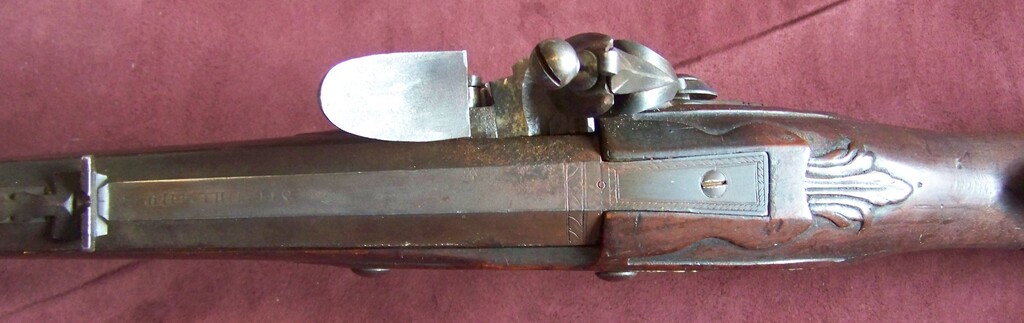

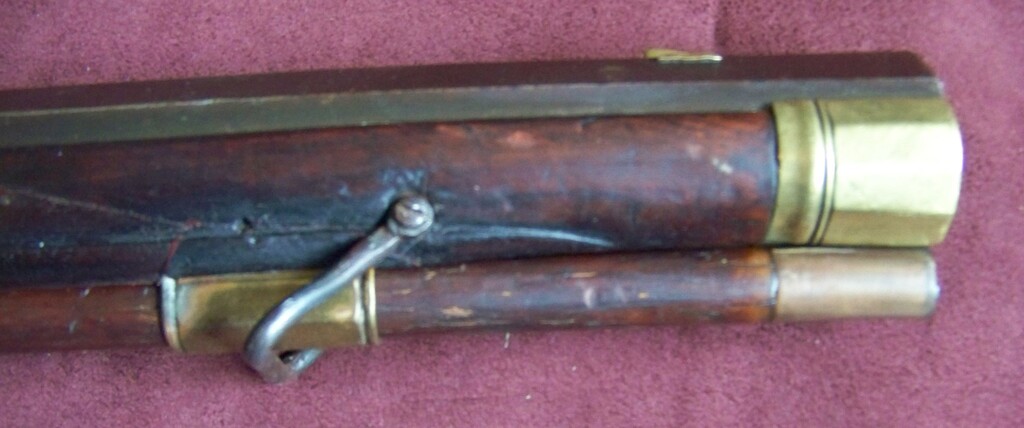
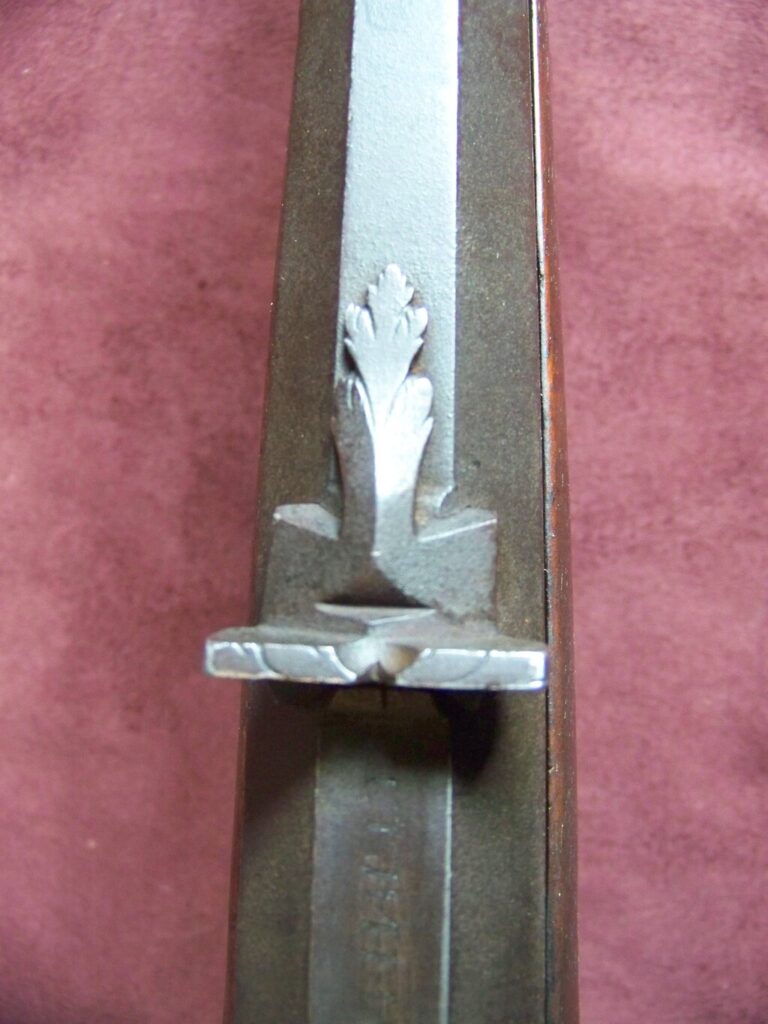
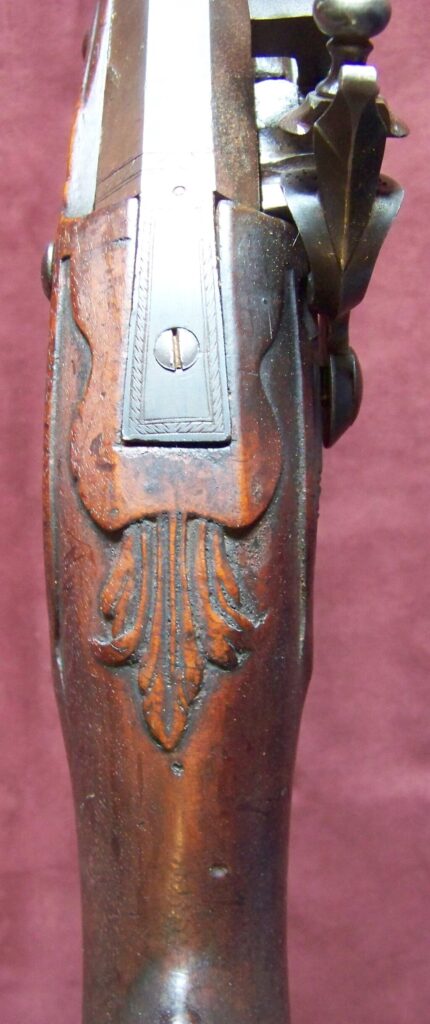
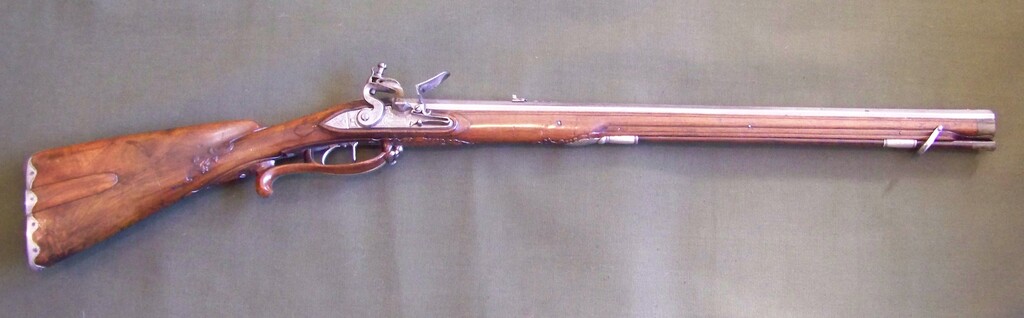
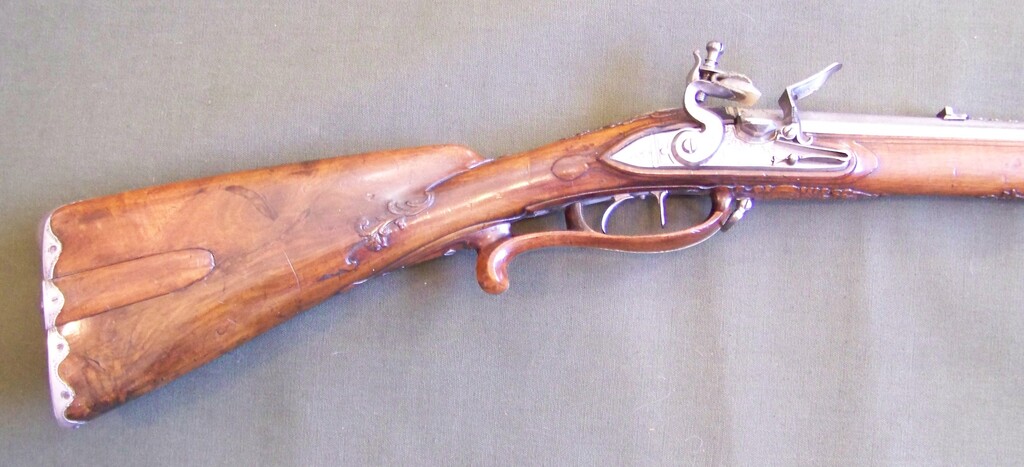
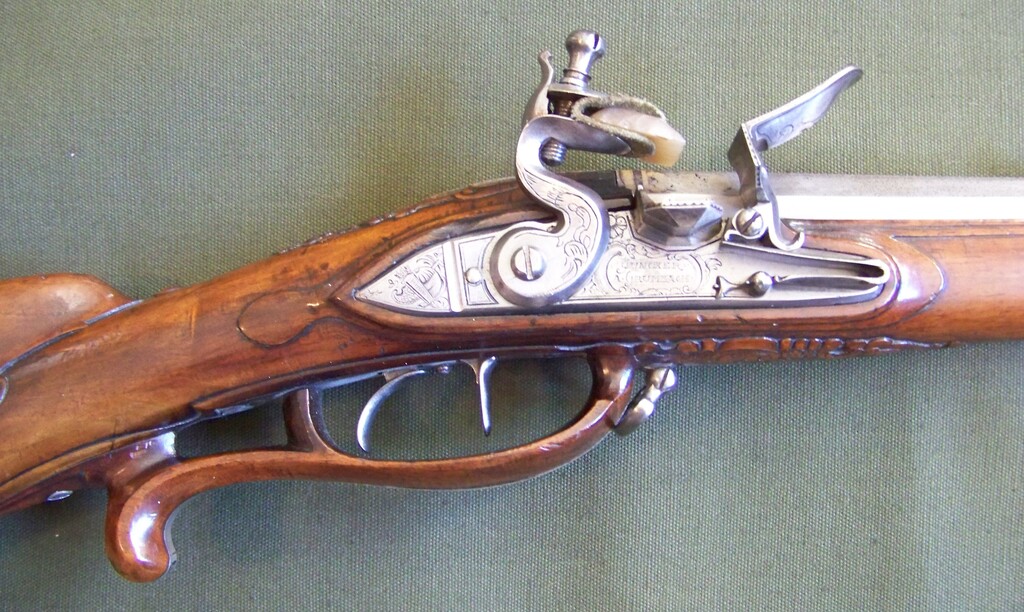
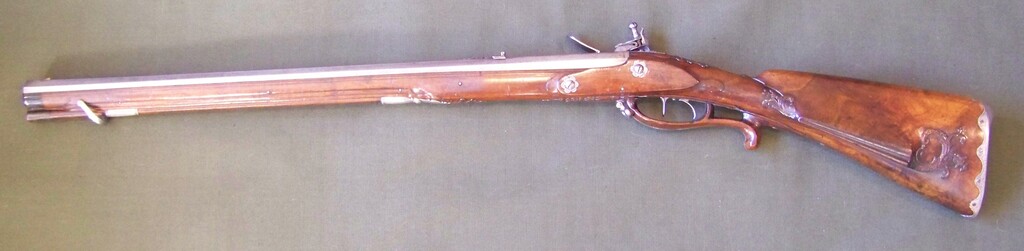
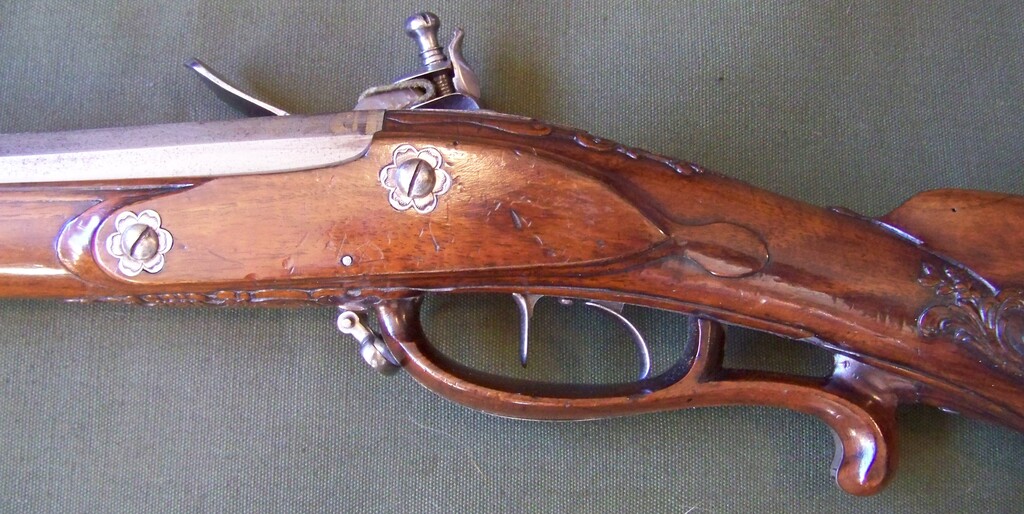
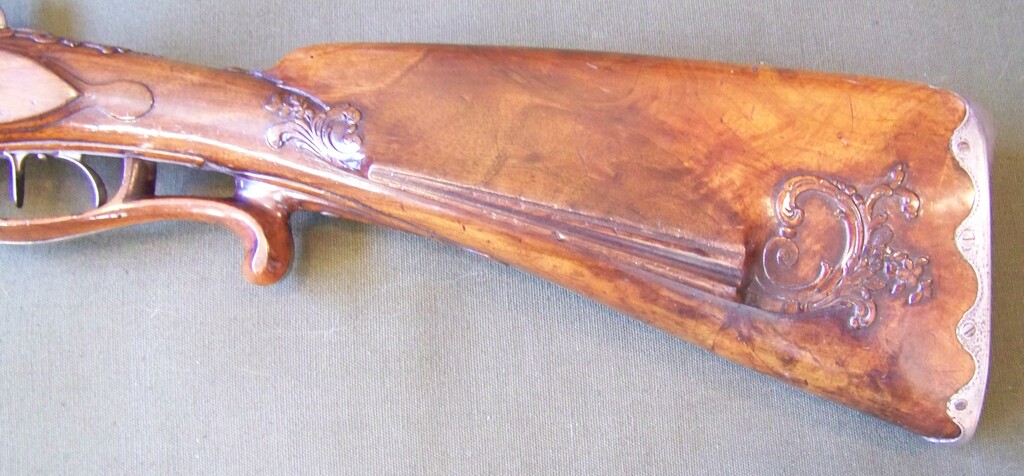
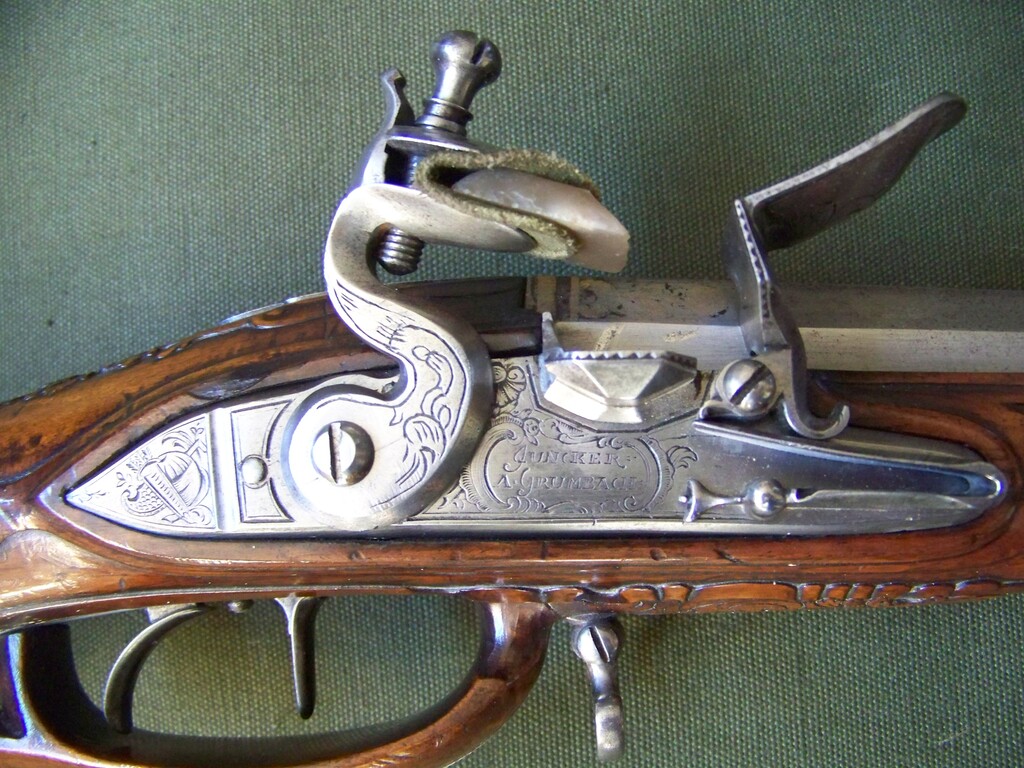
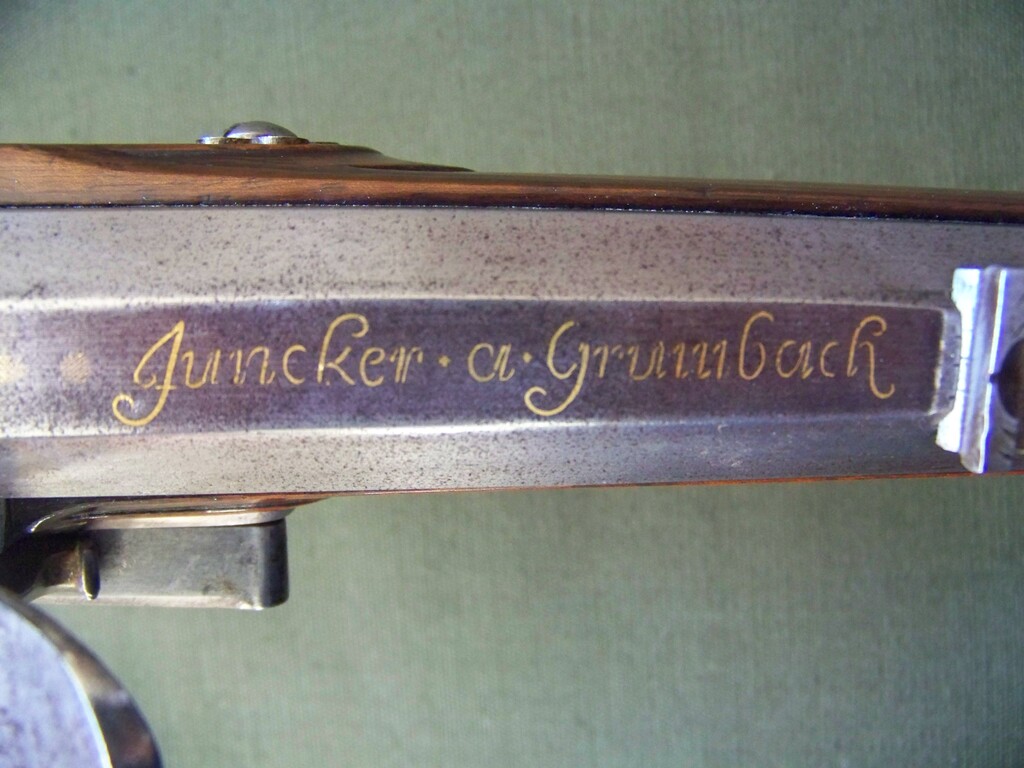
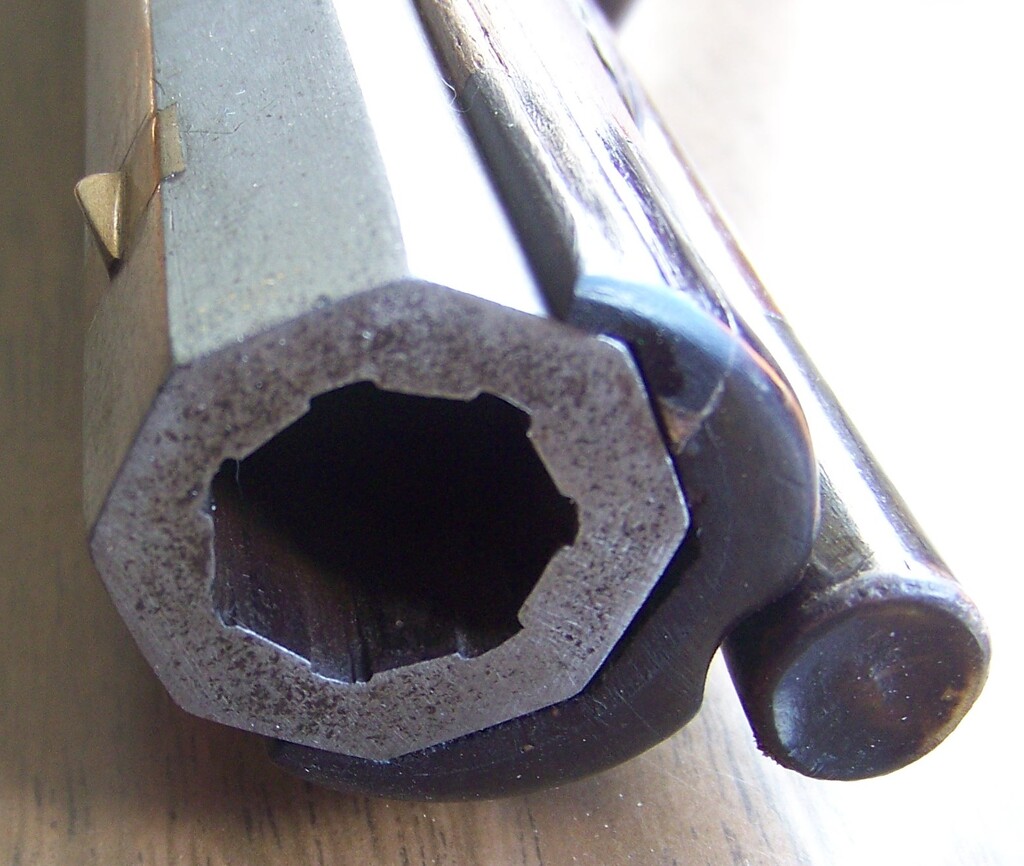
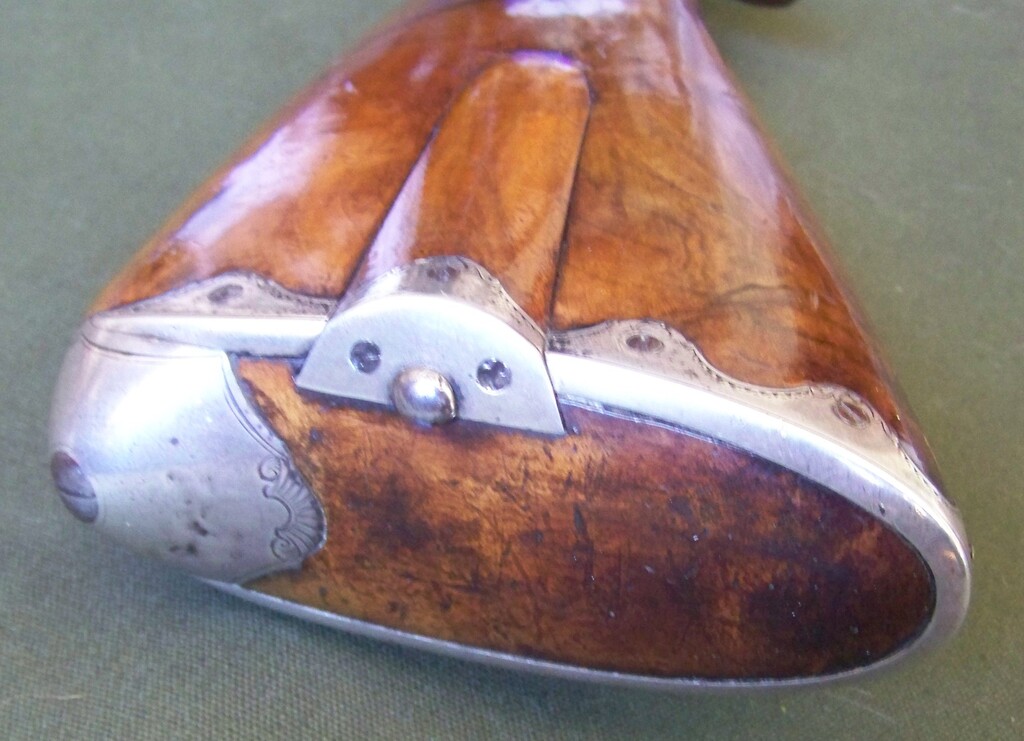
Next we have a group of images of a magnificent silver mounted .60 caliber rifle simply marked “Junker a Grumbach”. Nothing is known about this maker at the present time. This rifle is a good example of what is referred to as a Capuchin stock: a stock in which the Triggerguard and Butt Plate are of wood, sometimes the Triggerguard being part of the whole stock. In a 1751 Hunting Book it mentions that the chased, cast and engraved fitttings have become passé, and that in their stead the triggerguard and butt plate should be carved from wood.